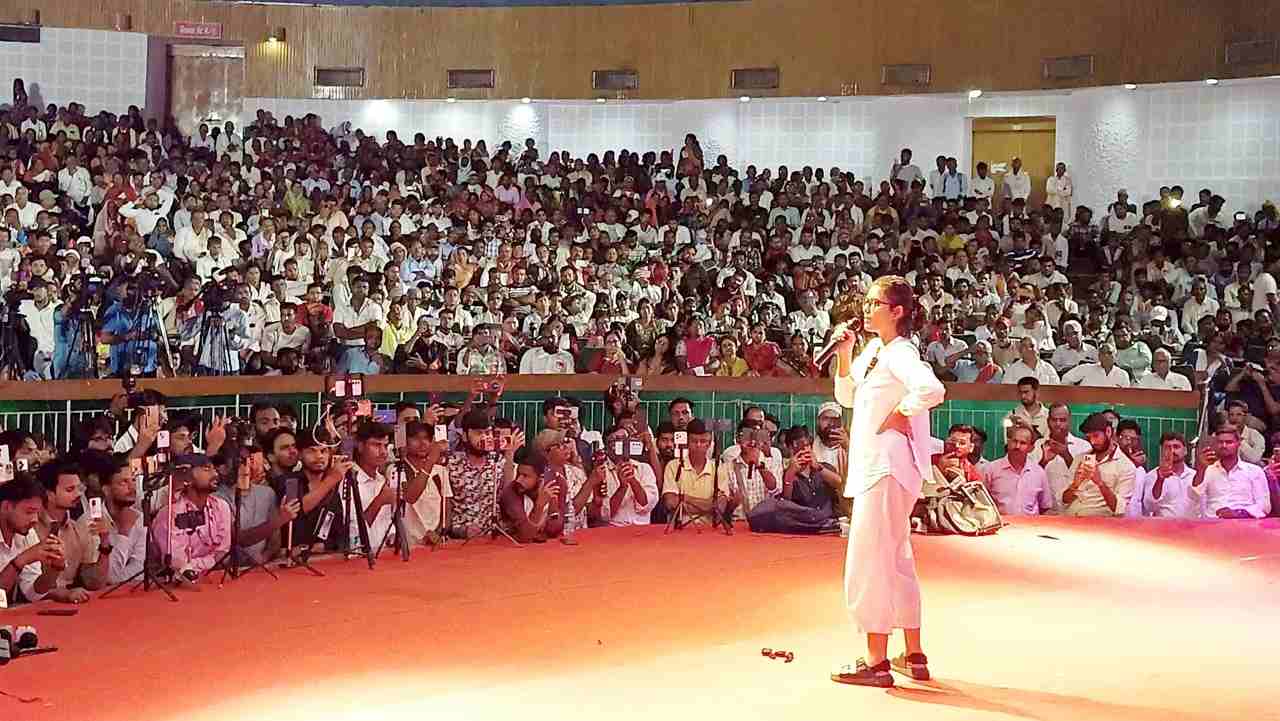
Students and young people from across Bihar came together at Shri Krishna Memorial Hall in Patna on September 6, 2026, for the ‘GEN Z Rising’ programme organised jointly by AISA and RYA. The programme brought together representatives of Gen Z and Gen Alpha to discuss the questions confronting young people, including education, employment, examination irregularities, police repression, democracy and the right to protest.
CPI(ML) General Secretary Comrade Dipankar and AISA National President Comrade Neha, a prominent face of the Jantar Mantar student movement, addressed the programme as the principal speakers. Bihar’s prominent Gen Alpha voice 6 year old Aditya Kumar also spoke at the gathering.
The programme was organised in four sessions, bringing together young people who have experienced state repression and participated in student and youth struggles.
The first session, titled ‘Julm Phir Julm Hai, Badhta Hai To Mit Jata Hai’, focused on police repression, protest and resistance. Vishal, who faced police brutality, shared his experience, while Arif, a victim of police firing in Siwan, spoke about his experience. Saba, a Patna University student leader who was jailed during the movement, spoke about the protest and her time in prison. Naveen, the father of a victim of the NEET examination crisis in Jehanabad, raised questions about the failures of the education and examination systems. School students from Nawada, along with a large number of Gen Z and Gen Alpha participants, also raised questions about the prevailing social and political situation.
The second session, titled ‘Awaaz-e-Aandolan’, focused on student and youth movements and their struggles. Speakers included Professor Chintu Kumari, a leader of the movement against the University Act of 1976; Paliganj CPIML MLA Comrade Sandeep Saurav; RYA National President Comrade Ajit Kushwaha; JPSC movement leader Habiba from Jharkhand; and Irfan, one of the prominent faces of the Jantar Mantar movement.
Professor Chintu Kumari raised questions over the government's intentions and demanded the repeal of the new university legislation. Irfan spoke about the experience of working people and said that the country runs on their labour. He also recited a poem in support of students and young people.
Comrade Sandeep Saurav pointed to the deepening crisis in Bihar's education system, asking what kind of education system allows children in Class 6 to struggle to read books meant for Class 2. He highlighted cuts in the education budget, the lack of proper school buildings and the imprisonment of those who raise questions.
Habiba shared her experience of the Jharkhand movement and expressed solidarity with the struggles of Bihar's students and young people. She pointed out that students from poor families spend years preparing for competitive examinations, only to face paper leaks and other irregularities when examinations are finally held.
Comrade Ajit Kushwaha said that Bihar's students and young people have been continuously fighting for their rights, but instead of listening to their demands, the government is responding with lathis and repression.
The final session was also addressed by satirist and professor Dr Medusa, who stressed the need to circulate truthful and progressive content on social media and to encourage young people to take the movement forward.

Bihar’s people gave strength to the Jantar Mantar movement: Neha
Addressing the gathering, AISA National President Comrade Neha thanked the people of Bihar for giving strength to the movement at Jantar Mantar. She said the repression unleashed by the Samrat government during the movement exposed its face, while Bihar also gave the country a powerful example of resistance against government policies and repression.
Comrade Neha said that protesting students and their families in Bihar were subjected to repression. She referred to the assault on the father of students such as Aditya and the treatment meted out to AISA leader Saba Afreen, including the persecution she faced in connection with her religious identity. Students were presented as criminals and their faces were circulated in newspapers, she said.
She said the people of Bihar, particularly students and young people, would hold the government accountable for these actions. The repression of students would have to be answered for, as would violence and rape against women and girls in Bihar. She also raised questions concerning people's voting rights and citizenship arising from the SIR process.
Comrade Neha said students are also demanding answers from the government over irregularities in the 70th BPSC examination and the irregularities in the Daroga recruitment examination. Every irregularity that jeopardises the future of students and young people must be accounted for, she said.
She called upon Bihar's students and young people to unite around the questions of their rights, education, employment, democracy and social justice, stressing the need to turn the student-youth movement into a broader people's movement against repression, injustice and corruption.

Education must become a people’s movement: CPIML GS
CPI(ML) General Secretary Comrade Dipankar said that GEN Z does not merely signify a generation, but also represents the struggle against injustice and the fight for rights. Education, employment, democracy, social justice and dignity are among the most pressing questions facing young people today, he said.
Comrade Dipankar called for the ‘School Theek Karo’ campaign to be transformed into a broad people's movement in Bihar. He said Bihar's school education system had suffered its greatest destruction over the past two decades. School infrastructure, availability of teachers and the quality of education remain in deep crisis. While the government has announced the renaming and upgradation of schools, there has been no corresponding improvement in their actual condition. Upgraded schools continue to suffer neglect and deprivation. “Upgraded schools have been turned into oppressed schools in Bihar,” he said. Universities, too, are passing through a serious crisis.
Comrade Dipankar said education must be made a question concerning the future of the whole of Bihar rather than being treated merely as an issue of students and teachers. He appealed to people across Bihar to turn the question of education into a people's movement and build a broad struggle for better schools, adequate teachers, quality education and an equal education system for all.
He also spoke about the targeting of girls and young people through social media in recent times. Referring to Prime Minister Narendra Modi's comments on the movement and its language on Instagram, Comrade Dipankar said the remarks reflected a cultural shock to the government and amounted to provocation that encouraged forces of hooliganism and violence. Its impact could be seen from social media to the streets, he said, referring to the experience of young women such as Ruchika Singh, who spoke about the devastating impact of the Prime Minister's remarks on their lives.
Comrade Dipankar said the targeting of young people and protesters as ‘dimagi Naxals’ on August 15 was also part of this politics of provocation. The politics of old slogans is coming to an end, he said, and the questions raised by young people cannot be answered through repression and attempts to discredit them.
On the Supreme Court's position regarding withdrawal of cases, Comrade Dipankar welcomed the move and said that if cases against the Jantar Mantar movement can be withdrawn, cases against the farmers' movement and Shaheen Bagh movement must also be withdrawn.
The ‘GEN Z Rising’ programme brought together the experiences of students, young activists, movement leaders and democratic voices, placing the questions of education, employment, examination justice, repression and democratic rights at the centre of a growing student-youth resistance in Bihar.