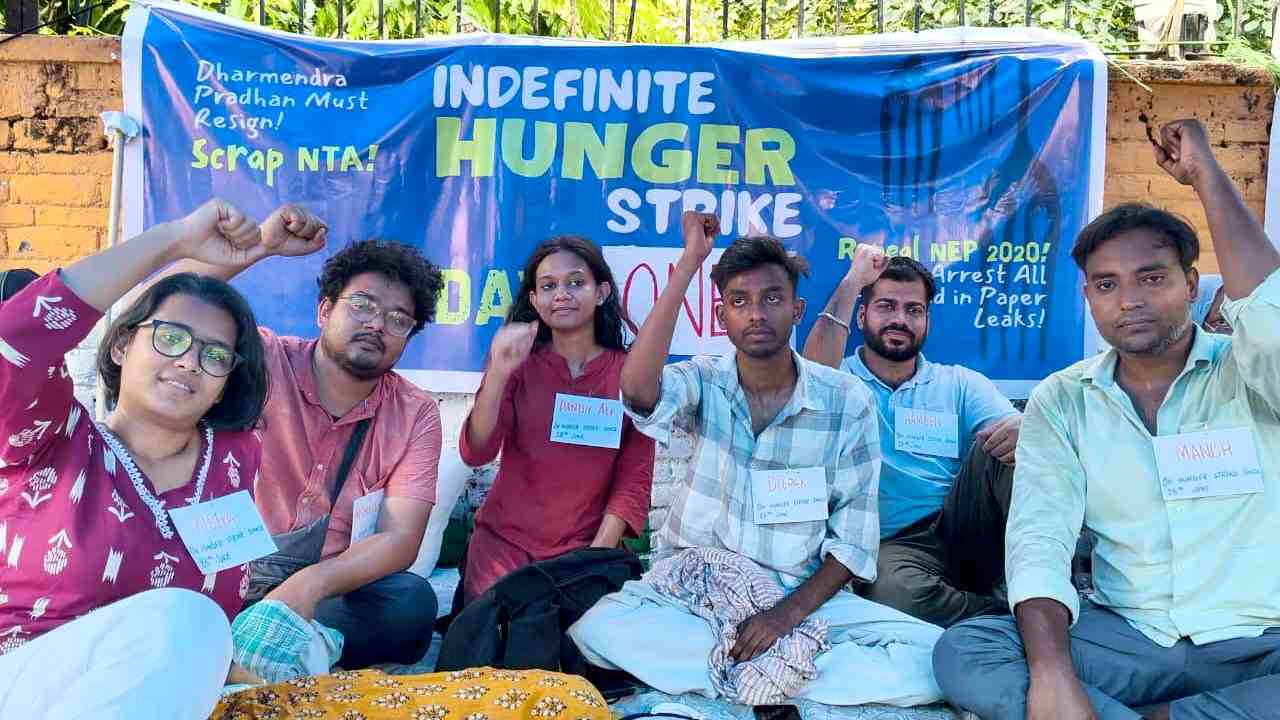
The indefinite hunger strike at Delhi's Jantar Mantar entered its third consecutive day on June 30, with students and youth activists intensifying their struggle against the BJP government's education policies and demanding the resignation of Union Education Minister Dharmendra Pradhan. The hunger strike by activists of the All India Students' Association (AISA), launched in solidarity with climate activist Sonam Wangchuk at the Cockroach Janta Party (CJP) protest, has emerged as a powerful expression of resistance against the Modi government's anti-student education policies, particularly the National Education Policy (NEP) 2020 and the National Testing Agency (NTA).
After seven days of continuous CJP protest, Sonam Wangchuk began his indefinite fast on June 28. Joining him in the fast are six student leaders and activists: AISA All India President Neha, JNUSU Joint Secretary Danish, AISA Uttar Pradesh President Manish, AISA Delhi University Vice President Deepak, JNU activist Hrishikesh, and former AUD Students' Council Central Council member Aameen. They have declared that they will continue their fast until the government is held accountable for the repeated crises in the education sector, the Education Minister resigns, the NTA is scrapped and NEP 2020 is repealed.
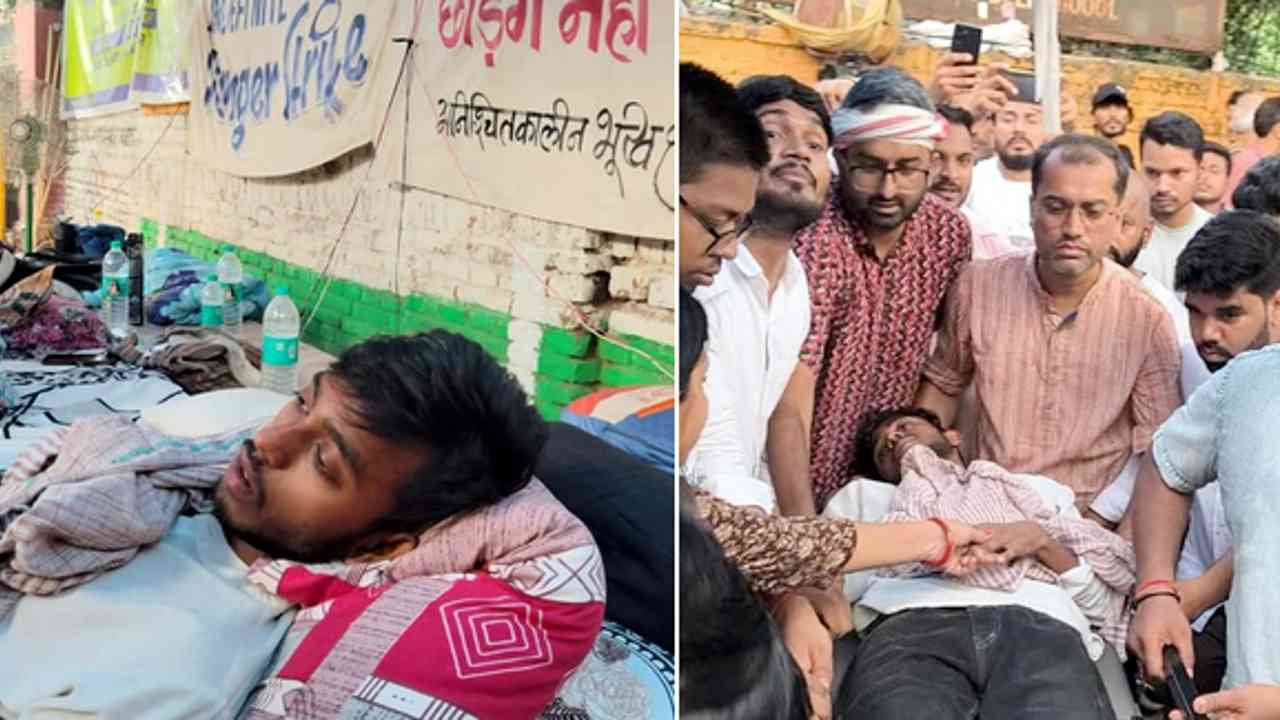
As the strike entered its third day under blistering summer conditions, the physical condition of the hunger strikers showed signs of deterioration. Medical examinations conducted at the protest site reported falling blood pressure among several participants, dehydration, physical exhaustion and continued loss of body weight, reflecting the severe strain of the indefinite fast. Despite the worsening health situation, the hunger strikers reaffirmed that they would not retreat from their struggle.
Senior Advocate Prashant Bhushan visited the protest site on June 30 and extended solidarity to the hunger strikers. Interacting with the AISA activists on fast, he observed that defending democracy and demanding accountability from an increasingly authoritarian government requires immense courage and sacrifice. Saluting the determination of the students, he said their struggle against an unaccountable and dictatorial regime serves as an inspiration for democratic forces across the country.
The movement has continued to attract support from students, teachers, youth and democratic sections, who have rallied behind the demands to hold the Union Education Minister accountable for the deepening crisis in public education. The protest has sharply challenged the BJP government's systematic assault on accessible, equitable and democratic education through NEP 2020, the NTA and the growing centralisation and commercialisation of the education system.
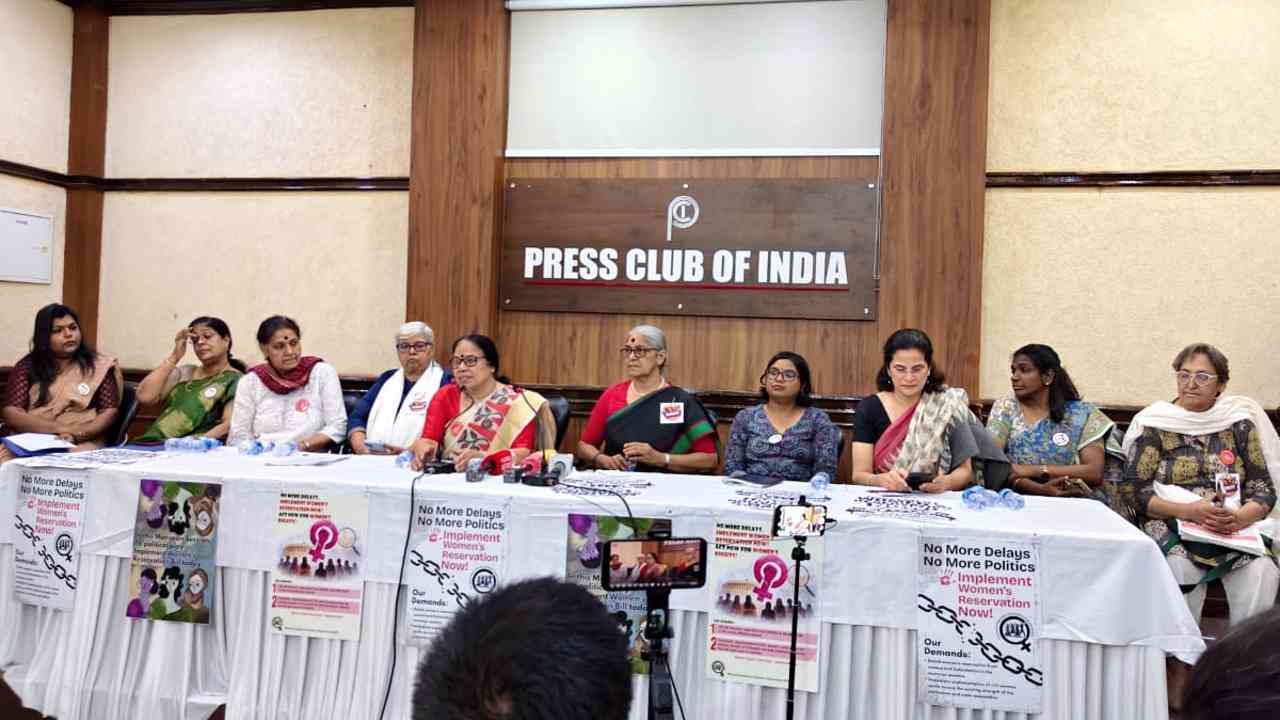
Earlier, on June 25, a delegation of women's organisations, including the All India Progressive Women's Association (AIPWA), visited the Jantar Mantar protest and extended solidarity with the students' and youth's struggle against corruption and the systematic destruction of public education. In a recent statement, Education Minister Dharmendra Pradhan referred to the protesting students as the "B-team of Dehshatgard [terrorism]," a remark strongly condemned by AIPWA National Secretary Comrade Shweta Raj. A 3-year-old girl was raped in a school in the country's national capital, yet Dharmendra Pradhan did not issue a single statement. Many students today are being forced to commit suicide due to paper leaks; they are being institutionally murdered, and Education Minister Dharmendra Pradhan remains silent on this. Under BJP rule, the institutional murder of students continues, which is deeply shameful. Expressing solidarity with this movement, AIPWA presented portraits of Savitribai Phule to CJP leader Abhijeet Deepke and AISA National President Comrade Neha.
On June 21, Comrade Sucheta De, All India Central Council of Trade Unions (AICCTU) leader and former JNUSU President, also extended solidarity to the ongoing Jantar Mantar protest demanding the resignation of Education Minister Dharmendra Pradhan over repeated examination leaks and the betrayal of India's youth. Citing the recent struggles of workers in Manesar and Noida for their basic rights, she emphasized that students too are fighting for justice, accountability, and their future.