The 2025 winter session of Parliament will be remembered as a textbook example of the BJP’s mischievous ‘politics of history’. The session was happening amidst India's most acute aviation crisis with hundreds of flights cancelled and thousands of passengers stranded in airports stranded for hours, a crisis which was entirely avoidable if only we had a measure of accountability and responsive corporate and state governance. And it was happening in India's capital city which had just three weeks ago witnessed a lethal car explosion near the iconic Lal Qila that claimed more than a dozen lives, and which remains the world's most polluted capital with most alarming AQI levels. Yet the Modi government's topmost priority was a ten-hour-long discussion on ‘Vande Mataram’ to mark the 150th anniversary of the poem.
If the intent was merely to observe the 150th anniversary of the poem which came to be adopted as India's 'national song' alongside the national anthem ‘Jana Gana Mana’ by the Constituent Assembly on the eve of the proclamation of the Indian Republic, then the government could have done it by issuing a stamp or hosting a commemorative event. But the government evidently had a different purpose, it wants to weaponize a fictitious narrative around the song to distort history and serve the Hindutva agenda today. The fiction peddled by the Sangh-BJP establishment would have us believe that Gandhi wanted the longer version of Vande Mataram as India's national anthem, but Jinnah was opposed to the song, and the Congress truncated the song to appease Jinnah and the truncation of Vande Mataram became the precursor of the eventual partition of India!
Nothing could be farther from the truth of Vande Mataram. The original poem had only two stanzas and had first appeared in the historic Bengali periodical called Bangadarshan launched by Bankim Chandra Chattopadhyay. Tagore set it to music and sang it first before Bankim Chandra Chattopadhyay and then in the 1896 session of the Congress in Kolkata. The version of Vande Mataram that Bankim Chandra included in his novel Anandamath was an expanded version adapted to the text of the novel. It should also be noted that the ‘motherland’ invoked in the song was the undivided Bengal province of undivided India and the song and especially the chant ‘Vande Mataram’ became a rallying cry during the movement against ‘Bangabhanga’ (Bengal partition) in 1905. Subsequently it acquired a pan-Indian interpretation and appeal and it was as a recognition of the historical impact of the slogan that stalwarts of India’s national and cultural awakening including Tagore, Subhas Chandra Bose, Gandhi, Nehru, Patel and Maulana Azad recommended the original poem with two stanzas as the national song.
In Anandamath, the song got invested with Hindu religious appeal, but the actual historical impact of the song was as a rousing anti-colonial patriotic invocation of the motherland. The inclusive secular nationalism of India rightly recognized the first two Bangadarshan version stanzas. The expanded Anandamath version may have been appealing in the context of the novel, but was not suited to the requirements of a national song. The question of ‘truncation’ of the poem is thus entirely misplaced and mischievous. The original version which historically had nationalist resonance was recognized, the expanded version used in the novel was not found suitable for the purpose of national song of multi religious India. The RSS and its Hindutva ideology had nothing to do with India’s anti-colonial national awakening and the freedom movement and the predecessors of today's BJP had therefore little association with the nationalist appeal and usage of Vande Mataram. Today they are keen to mischievously invoke the Anandamath version of Vande Mataram to malign India’s anti-colonial legacy and serve their Hindutva agenda. Also, contrary to the BJP’s claims, the strongest suggestion to choose the original two stanzas over the Anandamath version came from Rabindranath Tagore and not from Jawaharlal Nehru.
While distracting people’s attention away from the burning issues of the day and bogging the people down in a misleading and divisive debate over Vande Mataram in the name of celebrating the 150th anniversary of the song, the Modi government once again used a truncated parliament session to push its sinister legislative agenda. The government wants 100% FDI in the insurance sector and private participation in the strategic nuclear energy sector. The sphere of higher education is being sought to be brought under centralized control by setting up a single Higher Education Commission of India obviously with a view to weakening federalism, promoting commercialization and securing greater ideological indoctrination and influence of the RSS.
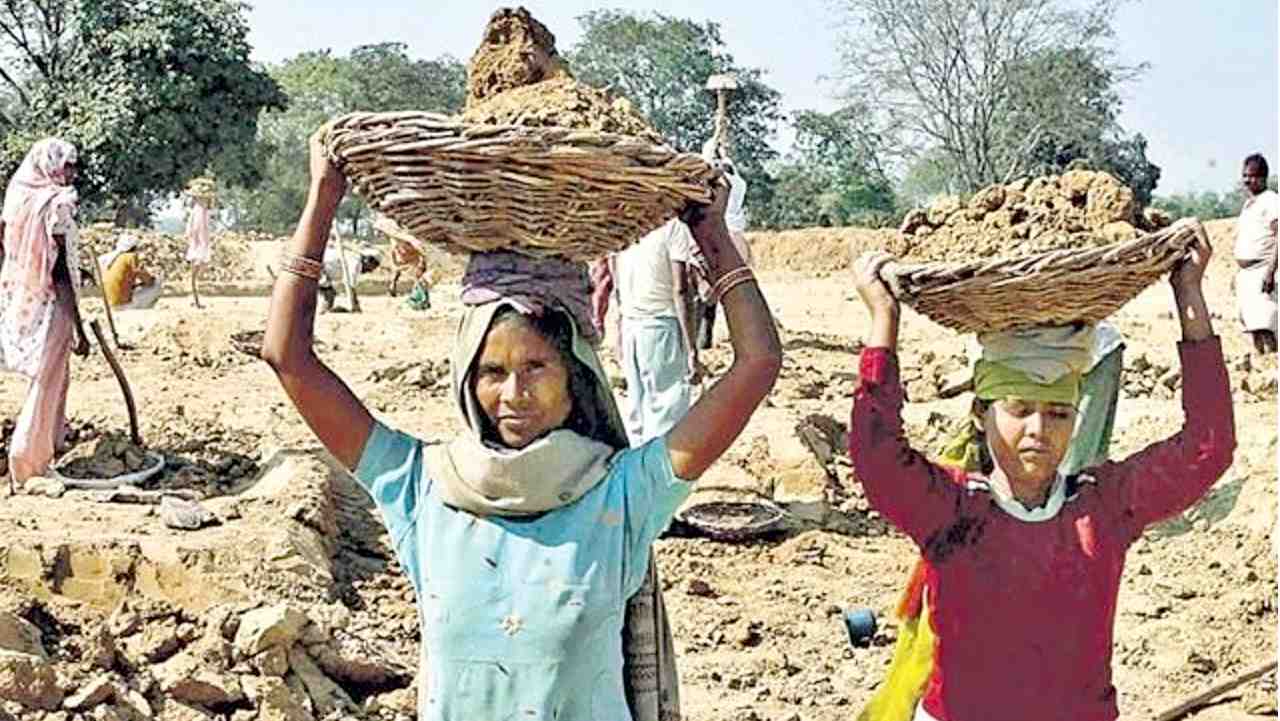
And finally, while subjecting workers to the corporate jungle raj of hire and fire, the government also wants to do away with India's biggest welfare legislation, the Mahatma Gandhi National Rural Employment Guarantee Act, 2005. The proposed replacement. the VB-GRAMG (Viksit Bharat - Guarantee for Rozgar and Ajeevika Mission (Gramin) Bill 2025 seeks to burden the states with disproportionate responsibility for funding while rendering the Act inoperative during the busy agriculture season. While farmers have been demanding greater linkage between agriculture and MGNREGA, the new law will suspend the very law during the agriculture season in the name of ensuring cheaper and more abundant supply of labour to agriculture. If parliament sessions are sought to be used for misleading debates on fictitious history and hasty sinister legislation to erode people's rights and subvert the constitution, the people of India will have to defeat this strategy by waging sustained and determined struggles on the streets.