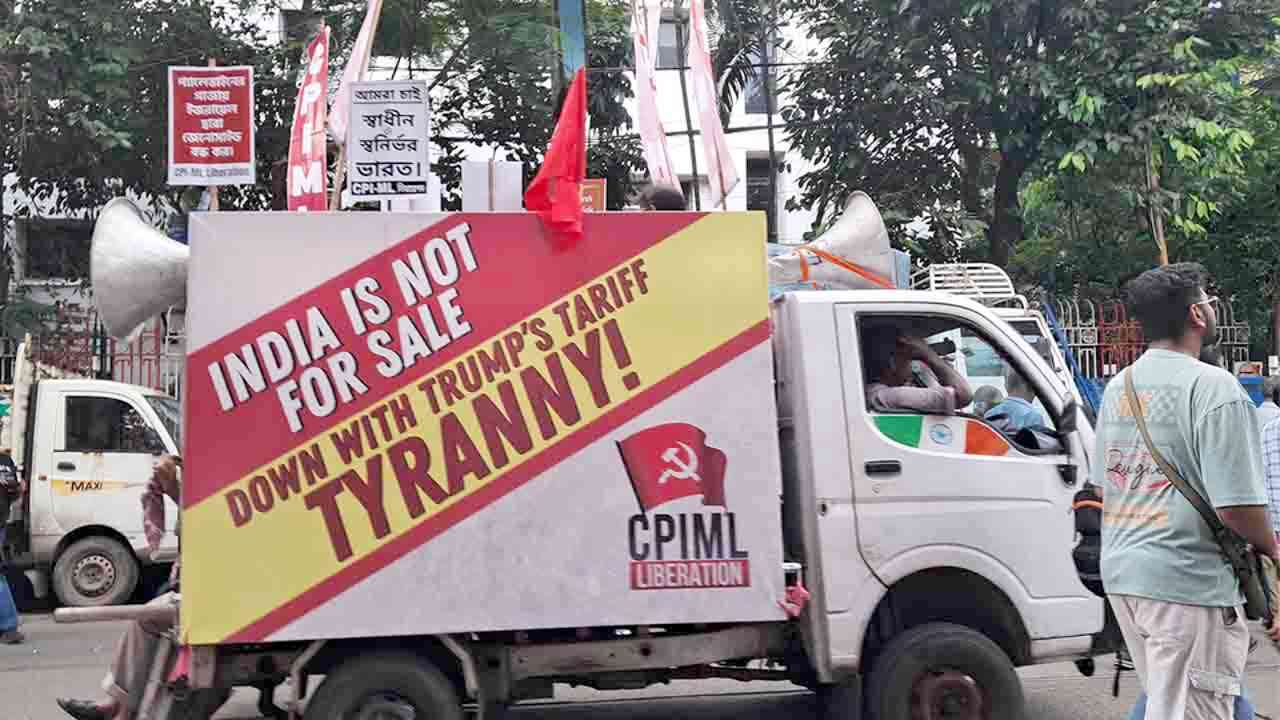
On 27 August, the Trump Presidency levied 50% tariffs on key Indian exports to the US. This meant a doubling of the 25% tariff rate that was already imposed on India as part of Trump's aggressive tariff war. The added 25% tariff has been invoked as a 'penalty' for India's purchase of oil and gas from Russia. The key export items to be directly affected by these punitive tariffs include textile, gems and jewellery, seafood, footwear, furniture and industrial chemicals. In value terms, this covers 55 percent of India's $87bn merchandise exports to the US. Among exempted items, the pharmaceutical industry remains the most prominent sector as the US depends crucially on generic medication imports from India.
These punitive tariffs are going to hit India hard in several ways. With such exorbitantly high tariffs Indian exports will be adversely affected by exports from countries like China, Vietnam, and Bangladesh all of which will now have a lower tariff advantage. Garments, footwear, seafood, gems and jewellery - these are all labour-intensive sectors and declining export orders will immediately lead to retrenchments and job losses across the chain. For example, at least 150,000 jobs are likely to be lost in Tiruppur in Tamil Nadu, the capital of India's garment exports which accounts for nearly a third of India's $16bn ready-to-wear garments exports. And this in turn will set off a chain reaction - lowering the domestic demand and consumption with adverse implications for India's home market and domestic manufacturing in other sectors too.
Ironically, the Ambani group which reaped massive windfall gains from the discounted oil purchase from Russia and thus provided the pretext for the punitive tariffs, has escaped unhurt in this tariff attack. Energy products which dominate the Reliance exports are exempted from the Trump tariffs. The actual quantum of gains made by Mukesh Ambani's Reliance Industries from discounted oil purchase from Russia is not known but the import and export figures from Ambani's Jamnagar refinery give us some idea. In June 2025, the Jamnagar refinery imported Russian crude oil at the rate of 746,000 bpd (barrels per day), more than half of the refinery's 1.36 million bpd capacity. And at 914,000 bpd, Reliance accounted for 71% of India's oil product exports.
Before Russia's war on Ukraine, Russian crude oil accounted for only two percent of India's crude imports, but over the last 42 months, the share has gone up to as high as 32 percent. The benefits of this discounted purchase have not been passed on to India's consumers, the cheaper imports have only swelled the profits of the Reliance Industries, which mostly resold the refined Russian crude to Europe. Trump's daughter Ivanka Trump attended the wedding of Ambani's youngest son while Mukesh Ambani was among the select club of invitees at Trump's swearing-in. While India pays the price of Trump's tariff war, and India's export economy and workers bear the brunt of the attack, Mukesh Ambani makes merry and counts his windfall gains. India's biggest crony capitalists, Gautam Adani and Mukesh Ambani, are not just plundering India's natural resources to satisfy their corporate greed, they are also responsible for much of India's crisis in the arena of international trade.
The Modi government and the RSS do not have the guts to confront Trump's tariff war with any kind of retaliatory response. If anything, the government's response is primarily one of shameless acquiescence to Trump's aggression. The government has indeed abolished the eleven percent tariff on cotton imports from the US, a move which will only push India's domestic cotton growers deeper into crisis. India's dairy industry and peasant agriculture will also have to face similar existential threats if the Modi government makes further concessions in response to the pressures being exerted by the American agribusiness lobby. Having neither the courage nor the vision to stand up to the tariff terrorism of the Trump Administration, Narendra Modi and the RSS are busy brushing up their long forgotten rhetoric of swadeshi and self-reliance. But when every policy of the government breaks the backbone of the domestic economy and the productive forces, shrinks the purchasing power of the common people and subjects the natural public resources and public services of the country to private control and corporate loot, economic nationalism is bound to get reduced to a cruel joke.
The US-centric foreign policy of the government has been no less responsible for the current crisis. Closer bilateral and regional ties of economic cooperation with countries of the Global South and a serious quest for de-dollarisation, for conducting trade using currencies defying and denting the hegemony of the US dollar can alone provide a conducive international economic and political environment for self-reliant economic development. Such an orientation also needs to be sustained by the steady growth of a powerful and resilient home market that can withstand the vagaries of the global market and financial flows, and promotion of policies of distributive justice that can counter the concentration of wealth in ever fewer hands and ensure efficient use of public funds for the greater common good of the people. The tariff aggression of the Trump Administration is a wake-up call for India to wholeheartedly reject the subserviently pro-imperialist foreign policies and crony capitalist, predatory economic policies of the current regime.