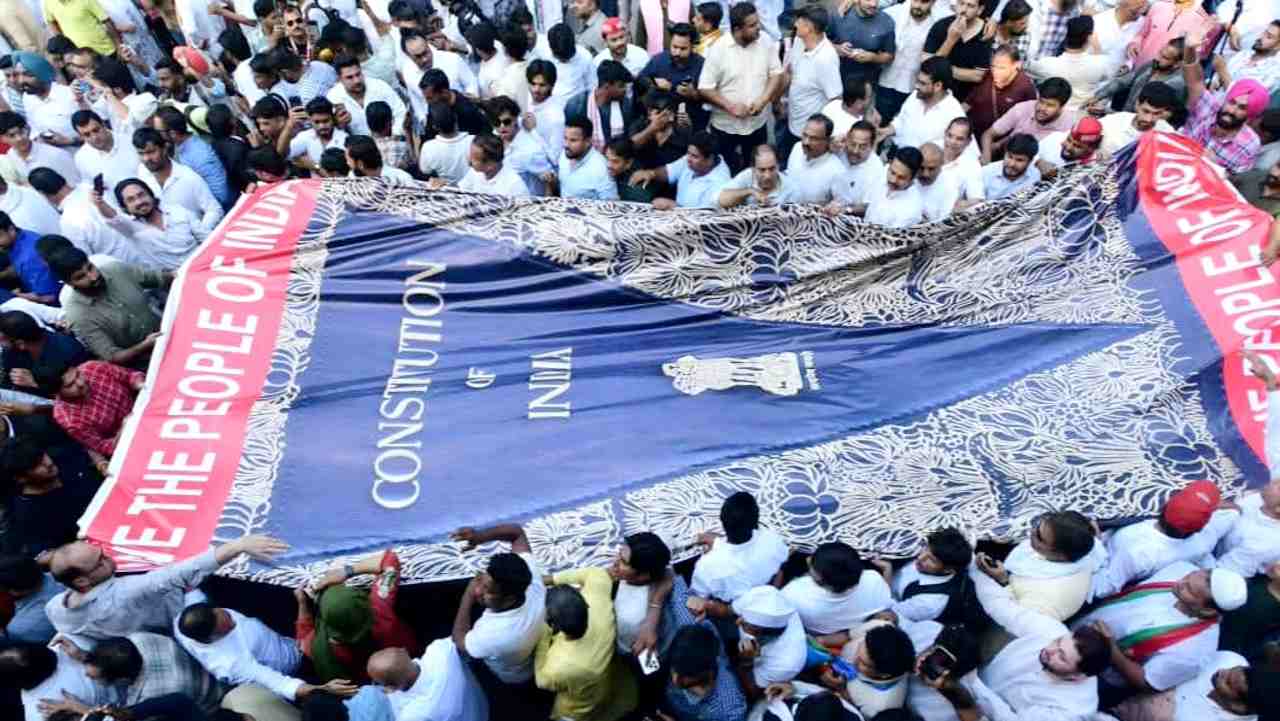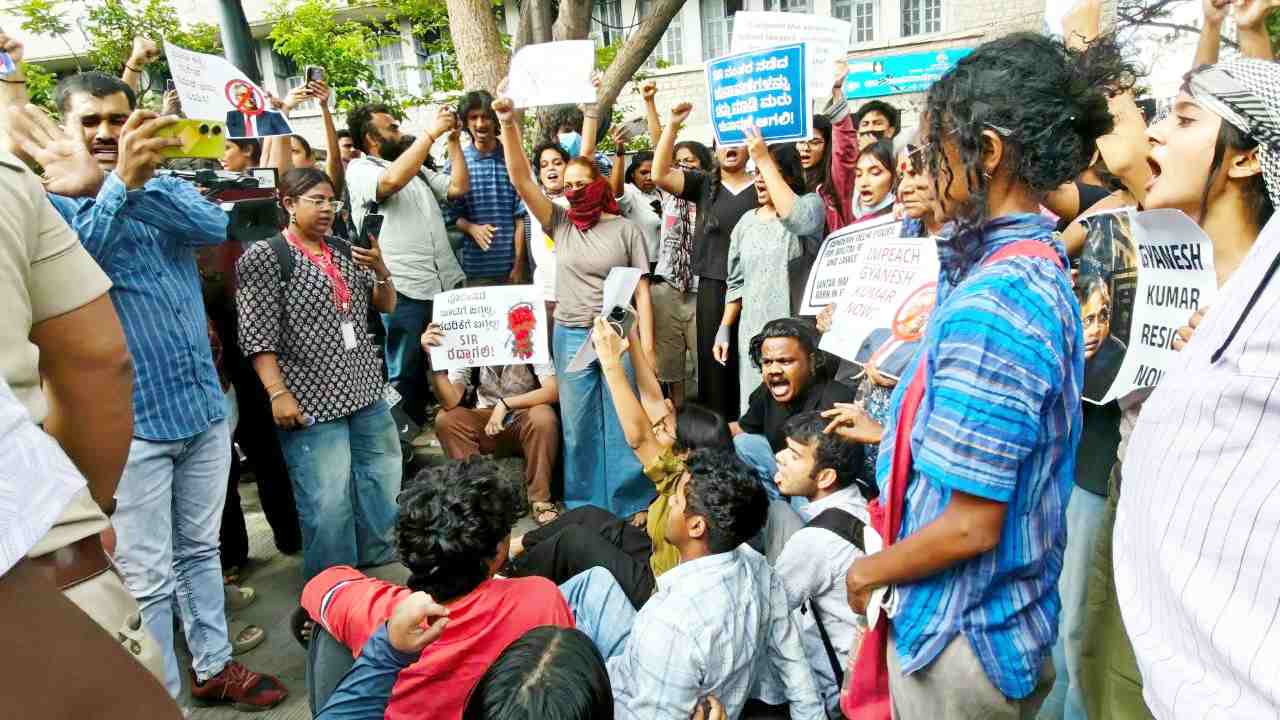
Narendra Modi has delivered yet another Independence Day speech from the ramparts of Lal Qila, his thirteenth August 15 address in a row. In the first few years following his 2014 ascent to power, his addresses used to have some immediate domestic and global context with the seventy-fifth anniversary of India's independence as the next milestone. After 2022, the goalpost was shifted straight to 2047 and now he remains conspicuously silent about the concerns that are foremost in people's minds which even his government can no longer ignore. For instance, the unprecedented Jantar Mantar protests that forced his government to sack education minister Dharmendra Pradhan after arrogantly announcing that the very concept of resignation of ministers is alien to the BJP's culture found no mention in his 80-minute address.
The spectre of Jantar Mantar however overshadowed his entire address. Without ever using the GenZ word which now dominates public discourse across India, Modi invoked the youth as many as 52 times. He however kept completely quiet about the crumbling education and examination system that has now got even Gen Alpha into agitation mode, his only promise for the youth was a repeat of the vague old promise of giving AI training to create one crore jobs per year while in reality many more jobs are being destroyed across sectors and this alarming job loss is being attributed to the impact of AI. He talked about free online coaching when NITI Aayog tells that on an average 25 government schools are being closed down every day. He said nothing about SIR and the disenfranchisement of millions of voters on frivolous pretext of spelling errors and mismatches, nothing about caste census that his government had promised to conduct just before the Bihar elections, but he appealed to the youth to help the government with the Census operation by updating and uploading family data.
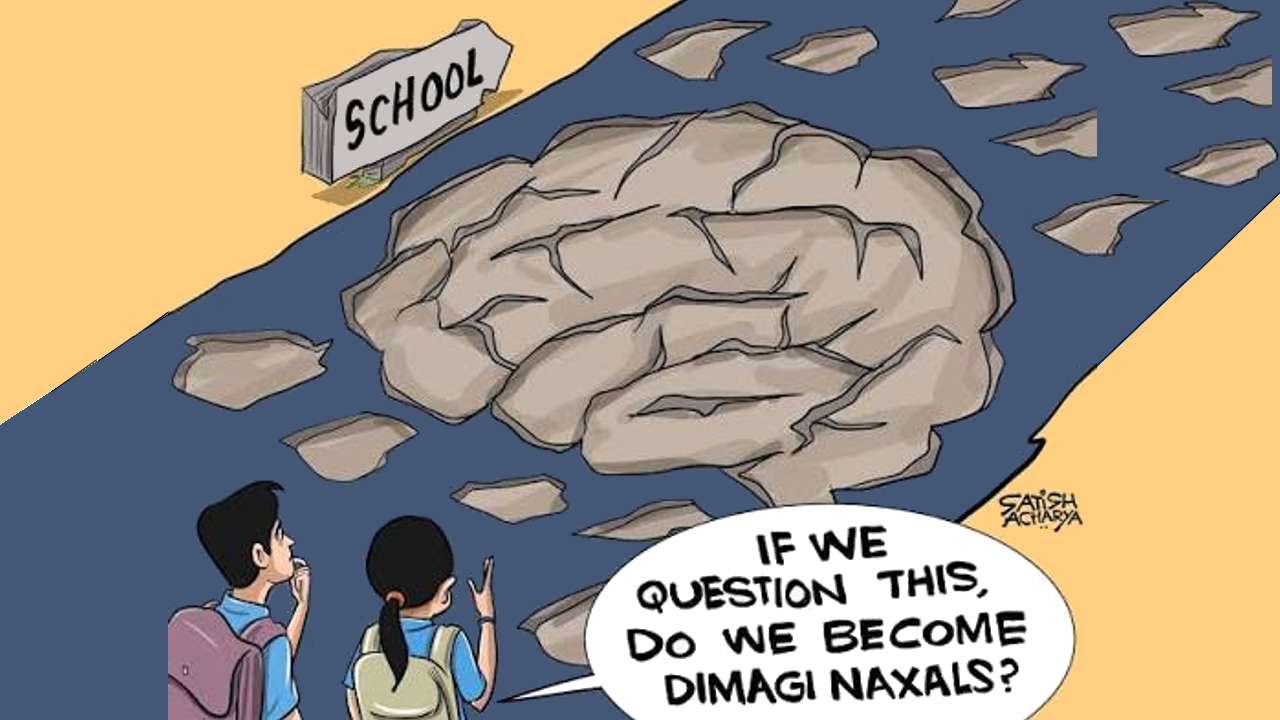
Modi kept absolutely quiet about GenZ and Jantar Mantar, but he introduced a new term to the Sangh brigade's hate-filled divisive vocabulary of internal enemies: after tukde tukde gang and urban naxal, andolanjeevi and anti-national, there is now a new entry in the form of "Dimagi Naxal" or intellectual Naxal. In a subsequent clarification, Kiren Rijiju tried to limit the Dimagi Naxal tag only to Maoist supporters and those who support Article 370. But in his speech Modi used this Dimagi Naxal tag with retrospective effect even applying it to intellectuals advising government policies in the UPA era. Evidently, he was referring to the power of the Left bloc in Parliament during the UPA period and the role of the National Advisory Council in enacting a set of legislations related to people's welfare and citizen entitlement and empowerment like NREGA, Forest RightsAct, RTI, Food Security Act and Right to Fair Compensation and Transparency in Land Acquisition, Rehabilitation and Resettlement Act.
Modi's problem is with all those legislations that expand rights and allow citizens a say in policy-making and governance. In 2014 itself he began with an unsuccessful attempt to scuttle the 2013 Land Acquisition Act that replaced the colonial era 1894 Act and provided for mandatory social and environmental audit, seeking of consent, payment of compensation and provision of rehabilitation and resettlement. Over the years the RTI has been systematically undermined, the Forest Rights Act has become a victim of deliberate non-implementation and violation and now MGNREGA has been replaced altogether by a new law that has reversed all the fundamental features of employment guarantee legislation.
At a time when the Himalayan region is witnessing increasing landslides and climate catastrophes, air pollution has assumed alarming proportions right in the national capital region and there are growing public protests against deforestation and attacks on India's fragile coastal environment and ecology, Modi took pride in his government's open flouting of environmental concerns. He said his government had turned 99% of India's coastline from 'no-go zone' to 'go-ahead zone' without of course spelling it out that the coastline is now being handed over predominantly to the Adani group to strengthen its grip over India's infrastructure and ports.
The term Dimagi Naxal refers to the critical role of 'dimag' or brain, of intellect and intellectuals, in social, cultural and political matters, something the Modi government is extremely afraid of and wants to stop by all means. Even before the coinage of this term we have been witness to the assassination of writers like Narendra Dabholkar, Govind Pansare, MM Kalburgi and Gauri Lankesh and prolonged incarceration and systematic harassment and persecution of well known public intellectuals, cultural personalities and human rights campaigners of India.
The call for identification and isolation of Dimagi Naxals in Modi's Independence Day address is a sinister dog whistle for both the state and the goon squads of the Sangh brigade to target dissenting voices and activists across the board. Modi's stress on creating "a vibrant network of civil defence" is perhaps a warning about unleashing more repressive force on the people, launching a new militia as well as more public-private partnership to tackle people's protests and movements by using retired Agniveers and legalising the goon squads of the Sangh brigade. The preposterous idea of policing people's brains follows from the Sangh brigade's practice of controlling people's minds, playing with their emotions and regimenting their expressions. It sounds eerily similar to the category of 'thought police' in George Orwell's classic portrayal of tyrannical dystopia in his novel Nineteen Eighty-Four.
The attack by BJP goons on Sheikh Mohammad Hafiz in Bankura district of West Bengal and the killing of his father Mohammad Mafiq for exposing the pitiable conditions of a primary school in their village is just a pointer to the kind of violence and terror the Sangh-BJP establishment is planning to orchestrate to crush the Jantar Mantar spirit of courage, defiance and resistance which is now propelling the youth across India. But a generation which has turned a derogatory and dehumanising word like cockroach into a badge of proud identity and platform of protest will surely not be intimidated or deterred by Modi's sinister "Dimagi Naxal" coinage.
The fascists are constantly in search of internal enemies and the need for a new coinage to identify the enemy is an admission that the previous vocabulary is no longer working. Naxalism is only an Indian byword for communism and by linking 'dimag' or brain with Naxalism, Modi has in a way admitted to the growing appeal and resonance of communist ideas against today's environment of fascist aggression, failed governance and corporate plunder. Let intellect and conscience prevail over bigotry and blind faith or 'andh bhakti'. Let the mind be truly without fear.