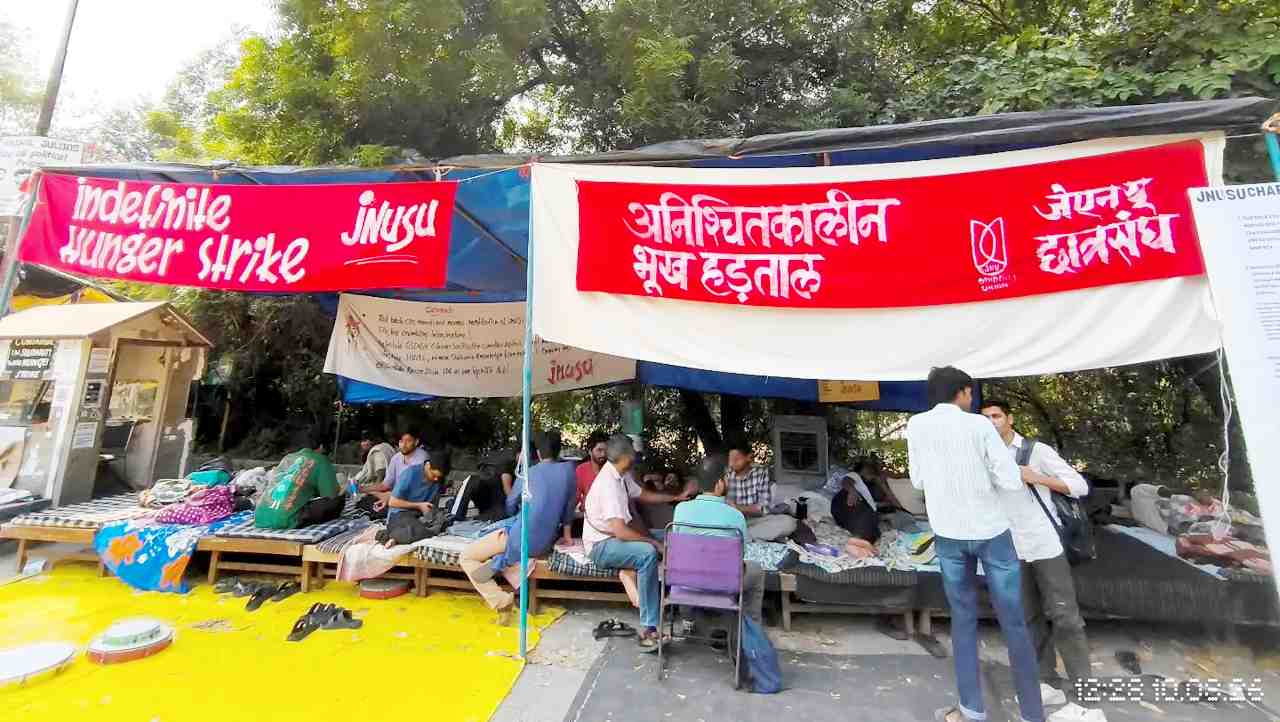
The hunger strike by Jawaharlal Nehru University Students’ Union (JNUSU) entered its 10th day on October 13, with the health of several protesting comrades deteriorating as the university administration continues to ignore their demands. The hunger strike is being led by JNUSU President Aditi, Vice President Gopika and General Secretary Sunil, along with several JNU students demanding the revocation of the rustication of JNUSU office bearers and action on longstanding issues concerning democratic rights, social justice, academic autonomy and crumbling campus infrastructure.
Despite repeated attempts to engage with the Dean of Students, the Vice Chancellor and other university authorities, the administration has failed to initiate meaningful dialogue or take concrete steps towards resolving the students’ demands. The continued rustication of elected JNUSU representatives has undermined democratic student representation, while the administration’s refusal to address students’ concerns has forced them to continue their struggle at the cost of their health.
The demands include the revocation of the rustication of JNUSU office bearers, withdrawal of the CPO Manual, restoration of GSCASH, reinstatement of the JNU Entrance Examination (JNUEE), and reform of the Equal Opportunity Cell in line with the principles of the Rohith Act. JNUSU has also demanded an independent annual audit of the Equal Opportunity Cell, effective institutional mechanisms to address caste discrimination, and the removal of Siddhanta Knowledge Foundation from university-related academic and administrative functions.
The students are also fighting for the restoration of essential campus facilities, including hostel infrastructure, library seating, functional lifts, Wi-Fi and mess services, along with repairs to campus roads, renovation of the stadium and Teflas, gender-neutral washrooms, and improvements to the university Health Centre. Their demands further address scholarship increases, transparency in mess billing, decentralisation of JRF fellowship approvals, fair hostel allotments, reservation rights, fee parity and meaningful student representation in university bodies.
JNUSU has stressed that the university administration must ensure regular medical monitoring and adequate medical facilities for all hunger strikers, while respecting their autonomy and dignity. With the health of several comrades deteriorating, the administration’s continued apathy raises serious concerns over its response to the students’ wellbeing and legitimate democratic demands.
JNUSU has called for immediate intervention by the university administration to resolve the outstanding issues and end the crisis. The students remain determined to continue their struggle for democratic rights, social justice, accountability and a university that guarantees dignity and equal opportunities to all.