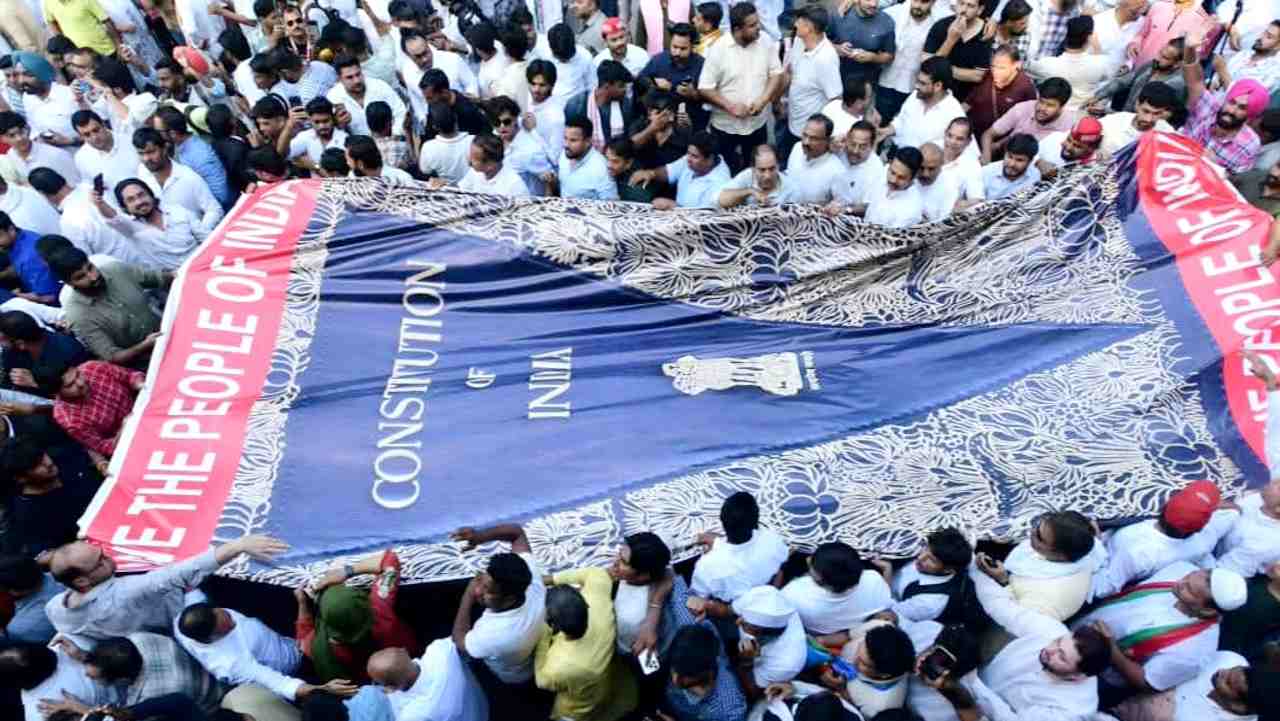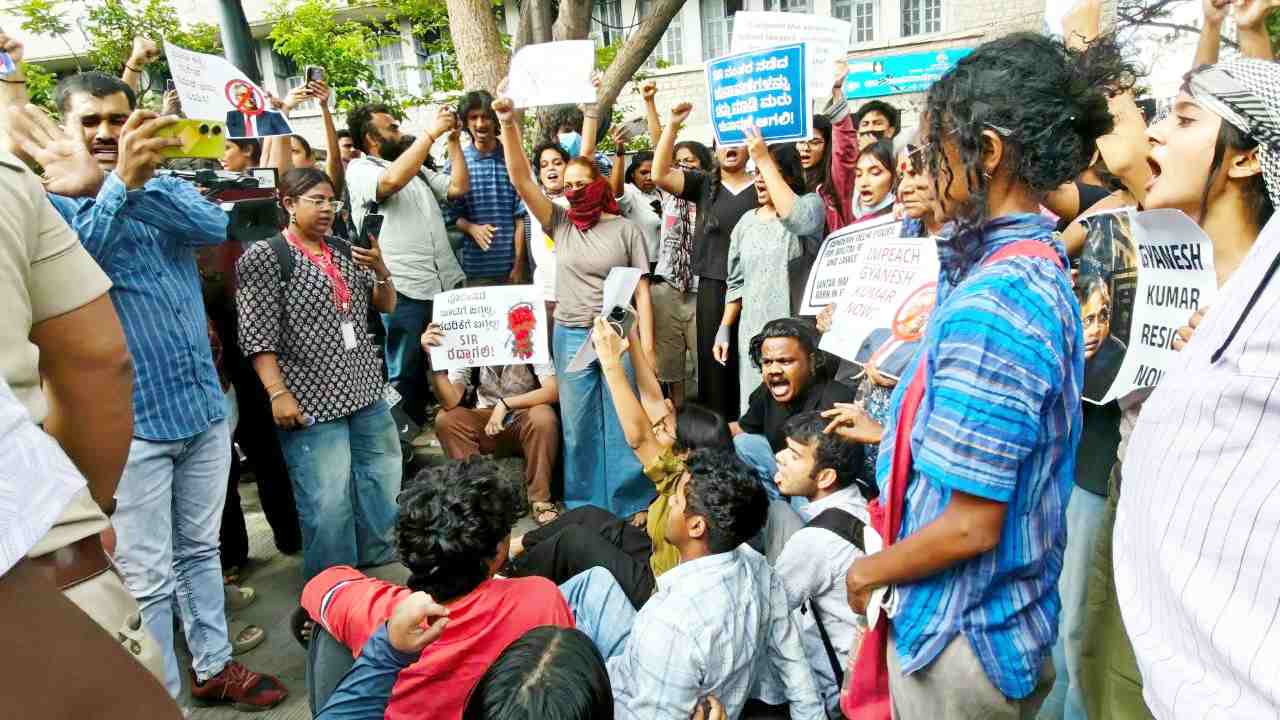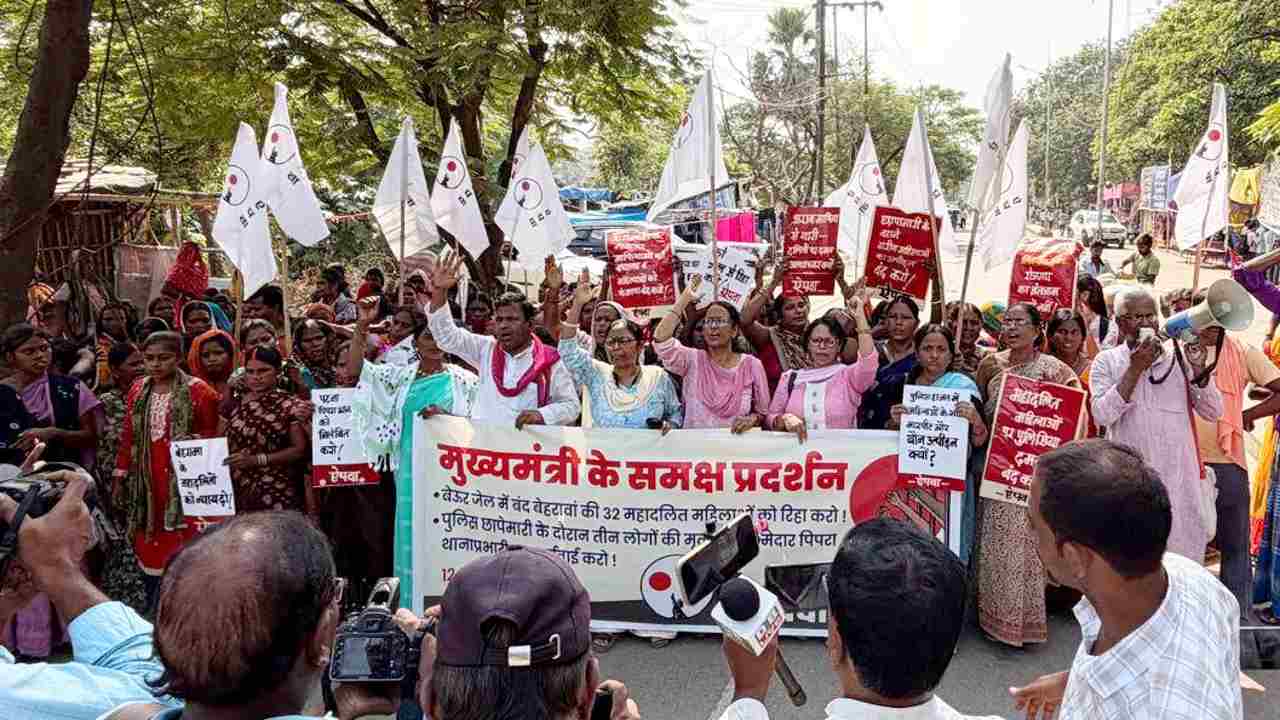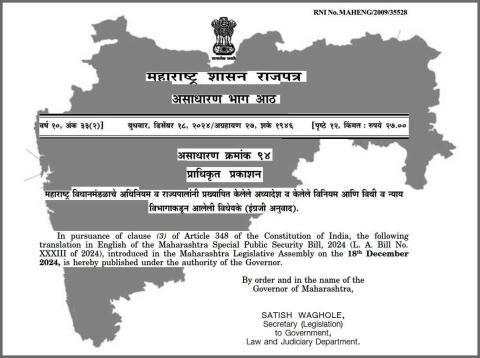
Left organisations, including CPIML, LNP, CPI, CPM, and PWP, along with various lawyers, students, and civil society groups, have collectively raised serious concerns over the Maharashtra Special Public Security Bill 2024. In a letter to the Joint Select Committee on the bill, headed by Shri Chandrashekhar Bawankule, the organisations have termed the legislation as draconian, repressive, and unconstitutional. The letter notes that, under the guise of combating what the bill describes as the “menace of naxalism” and organisations alleged to be involved in anti-state activities, the legislation is an attempt to create a police state and suppress democratic voices.
The proposed legislation grants sweeping powers to the Maharashtra government, enabling it to declare any organisation “unlawful” with little evidence or judicial scrutiny. This move would lead to the criminalisation of dissent, peaceful protests, and even non-violent civil disobedience. According to the bill, any group found “encouraging or preaching disobedience” to the government could be labelled as an unlawful organisation, opening the door to arbitrary state action.
Under the bill’s provisions, authorities such as the Deputy Magistrate or Commissioner of Police can seize properties associated with declared unlawful organisations, including movable assets like money and securities. The bill even allows for the forfeiture of assets with no legal requirement for proof of criminal intent. This is an attempt to curtail basic civil liberties and to suppress opposition to government policies.
The legislation also hands unprecedented powers to the state, which can act on its “opinion” to label any organisation unlawful. Although an Advisory Board is supposed to review the decision, the bill allows the government to bypass this process in cases deemed urgent. This creates a dangerous precedent for the erosion of democratic rights, pointing to the fact that the Advisory Board will consist of individuals who are either serving or have previously served as judges, many of whom may have political affiliations.
Another grave concern is the vagueness surrounding key definitions within the bill, such as what constitutes an “unlawful activity”. The broad language could easily be exploited to target activists, organisations, and individuals who challenge the government’s actions or policies. The bill’s lack of clarity on terms like “danger” and “menace” makes it a powerful tool for stifling political expression and dissent.
The bill proposes severe penalties, including up to seven years in prison and heavy fines for those found guilty of supporting or participating in unlawful organisations. These penalties are seen as disproportionate and arbitrary, with no regard for intent, further escalating fears of political misuse.
Left-wing parties, civil liberties groups, and human rights organisations have voiced their outrage, drawing parallels with the colonial-era Public Safety Bill of 1918, which was aimed at suppressing the Indian independence movement. They argued that this new legislation mirrors those oppressive tactics, targeting anyone who challenges the state's authority.
Comrade Ajit Patil of CPIML noted that the proposed Act is, in fact, designed to facilitate the smooth looting of natural resources, tribal lands, their Jal-Jangal-Jameen, and agricultural land by corporates like Adani and other multinational entities. These companies aim to exploit the region’s vast minerals and resources. The law is specifically intended to suppress any attempt by organisations to assert their legitimate constitutional rights to social, economic, and political equality, as well as the right to dissent and resist state repression.
The joint letter by the organisations demands that the bill be scrapped and requests a personal hearing to present their objections to the Joint Select Committee.