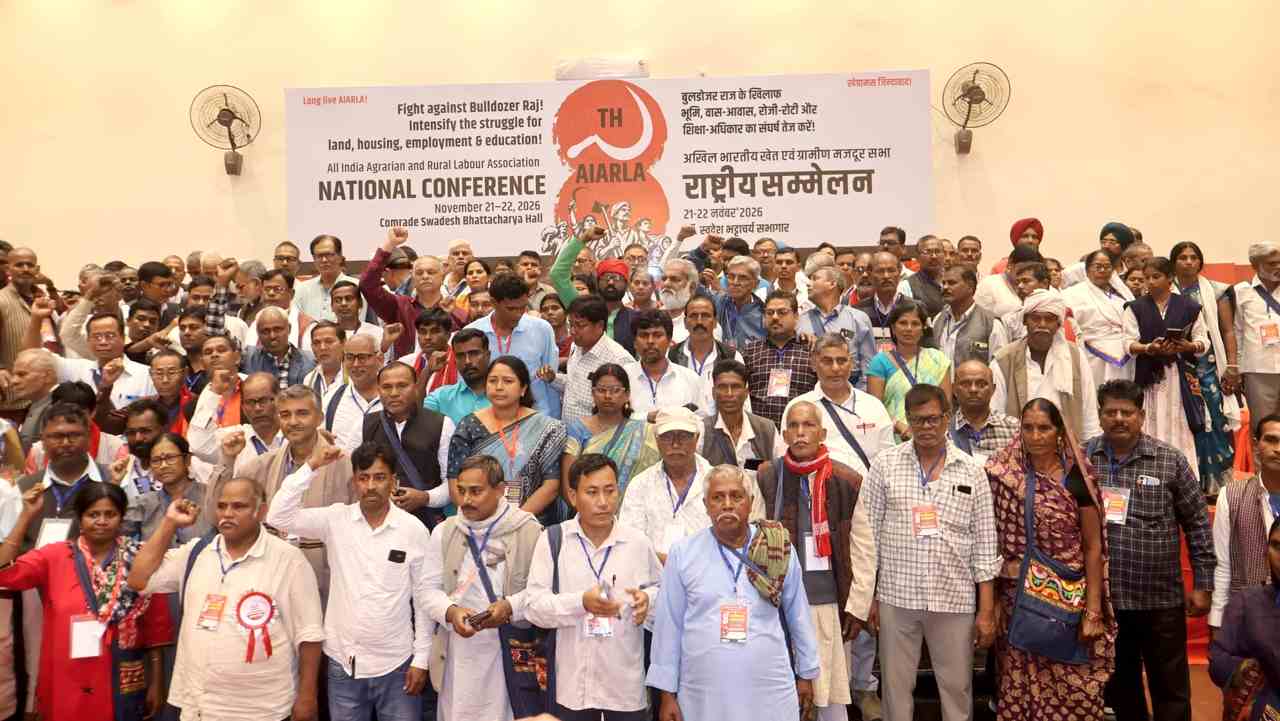
The All India Agricultural and Rural Labour Association (AIARLA) held its national conference on November 21 and 22 at Sariya in Giridih district, Jharkhand. The mass gathering drew 936 delegates, and 45 delegates from 11 states took part in the deliberations. In his address, AIARLA National Secretary Dhirendra Jha called for a nationwide movement linking the struggles of agricultural labourers, peasants, migrant workers, women and the rural poor. He placed land rights, a waiver of microfinance loans of up to ₹2 lakh for poor women and households, and the rights of migrant workers and their families at the centre of this agenda.
Drawing on the legacy of the Telangana and Naxalbari struggles, Dhirendra recalled B. R. Ambedkar’s warning in the Constituent Assembly that the contradiction between political equality and social and economic inequality could endanger Indian democracy. The politics of the Rashtriya Swayamsevak Sangh (RSS) and the Hindu Mahasabha stood opposed to the egalitarian vision of the freedom movement. Today, the advance of fascist politics, the persistence of feudal domination and the concentration of land, forests, rivers and other public resources in corporate hands make the defence of the Constitution inseparable from the struggle for social and economic equality.
Land Rights and the Dignity of the Poor
For a landless family, having a plot on which to build a home is a question of dignity and security. Land ceiling laws and the Bhoodan movement held out the prospect of land for the landless. Today, governments hand over large tracts to corporate houses while poor peasants and workers face displacement. In Bihar, the distribution of land donated under Bhoodan, settlement rights on government land and secure titles for poor households remain unresolved.
The conference called for a national programme to put land reforms back on the political agenda, distribute land to the landless and protect families against eviction. These struggles confront landlord domination, land mafias and corporate land grabs. It also urged state units to document land ownership, identify government and Bhoodan land, and track distribution and evictions so that campaigns can address the conditions in each region.
Microfinance Debt and Migrant Workers’ Rights
Poor women often borrow to meet basic household needs. With irregular work and inadequate social security, families struggle to keep up with instalments and interest while facing pressure from recovery agents. Reports of suicides linked to indebtedness in Bihar, Uttar Pradesh and other states reflect a wider crisis of rural livelihoods. Corporate loans worth thousands of crores of rupees are written off while poor women are pressed to repay loans taken to keep their households going. Dhirendra proposed a mass campaign for a waiver of up to ₹2 lakh, grounded in women’s accounts and documentation of household debt.
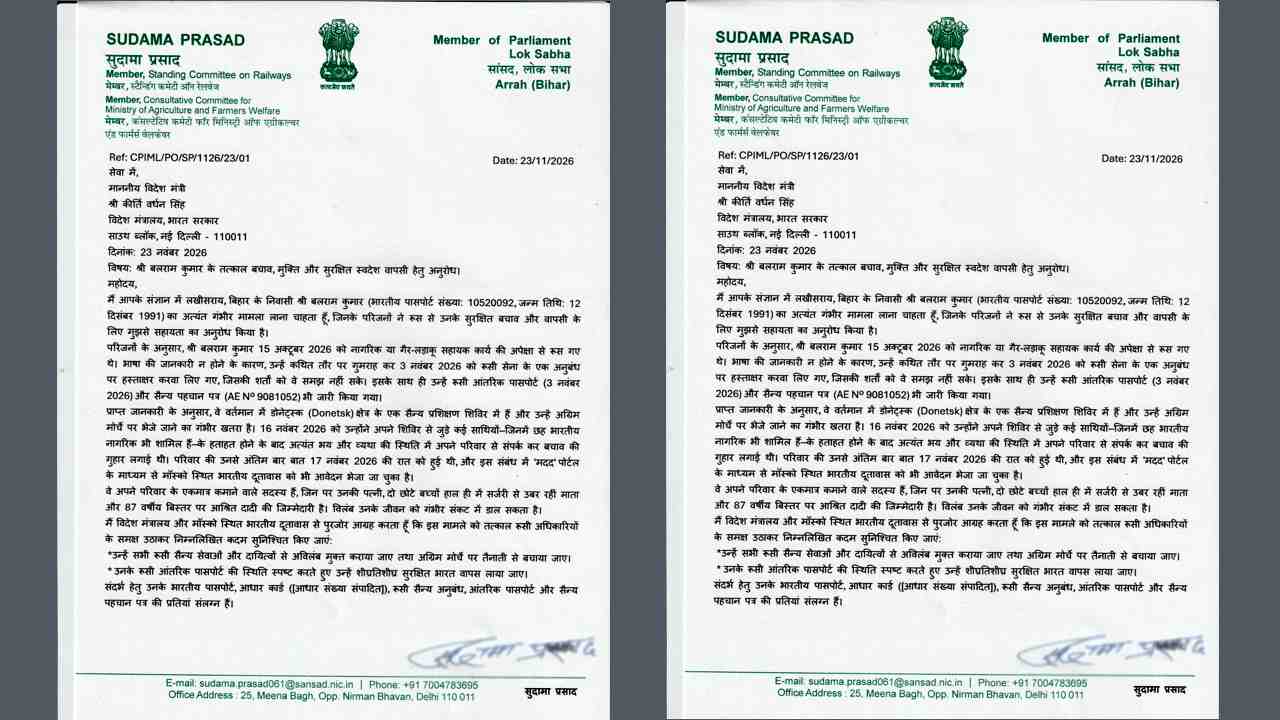
An elderly delegate from Darbhanga, Bihar, described villages where younger workers leave in search of jobs and women are left to manage agriculture, childcare and the care of older relatives. Many of these families remain landless and live in insecure housing. Workers from Bihar, Jharkhand, Odisha and West Bengal travel across the country and abroad for employment, taking up work in agriculture, brick kilns, construction and the informal economy. The address called for organising workers both in their home villages and where they find employment, documenting their wages and working conditions, and taking up the housing and social security needs of their families.
The conference also linked wars and imperialist interventions, including the attacks on Gaza and the conflict involving Iran, Israel and the United States, to higher fuel and food costs and insecurity for Indian workers abroad. It recalled how workers lost jobs and struggled for food, housing and transport during the COVID-19 pandemic. In parts of Gujarat, shortages of cooking gas forced workers to cook over firewood. These experiences show how heavily global crises fall on working people.

Poverty, Nutrition and the Climate Crisis
There is a serious contradiction between the government’s claims of declining poverty and the actual economic conditions visible in rural areas. Official claims of declining poverty must be tested against what families can afford to eat and what they have to spend on housing, education and healthcare. The address called for reviewing how poverty is measured, with attention to calorie intake and nutritional adequacy. Whether a family can regularly afford vegetables, milk and eggs, and whether women and children get enough to eat, must inform any assessment of its living conditions.
Erratic rainfall and drought disrupt agriculture, while forest destruction and the loss of rivers and ponds undermine rural livelihoods. In the Himalayan region, uncontrolled construction, the cutting of mountains and melting glaciers deepen the crisis. For peasants, Adivasis and rural workers, defending land, forests and water against corporate appropriation is part of defending the means of livelihood.
Building a Nationwide Movement
The conference reviewed an initiative to bring around 33,000 comrades in Punjab into the wider movement and efforts in Jharkhand to coordinate with organisations rooted among coal workers and poor Adivasi communities. Comrades associated with the Red Flag movement have been organising agricultural labourers and the rural poor in Varanasi and the wider Purvanchal region of eastern Uttar Pradesh. The address identified opportunities for growth in Maharashtra and noted work underway in Gujarat, Andhra Pradesh, Odisha, West Bengal and Assam.
The organisational proposals include meetings in every state at least once every three months, expansion at the panchayat, block and district levels, regular exchanges and joint programmes across states, and systematic records of membership and local activity. Research on land, debt, migration, poverty and the environment must advance alongside mass mobilisation. Dhirendra stressed that organisation and political understanding are the two principal means through which the rural poor can build their collective strength. Developing new leadership and linking local struggles across states are central to building a nationwide movement for democracy, social justice and dignity.