|
THE CPI(ML) CONSTITUTION
CHAPTER - I: Name
and Flag
Name of the Party
Article 1: The name of the Party is The
Communist Party of India (Marxist-Leninist).
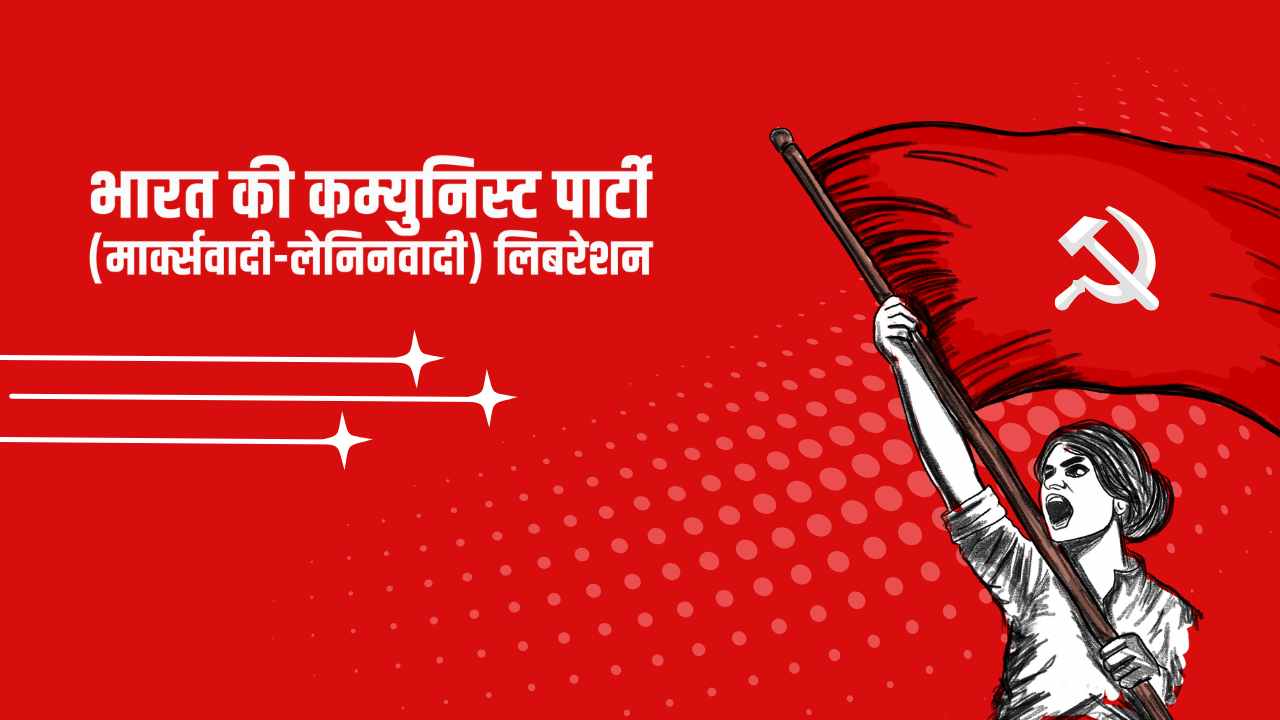
Flag
Article 2: The flag of the Party is the
red flag of rectangular size, the ratio of length and breadth being
3:2, with hammer and sickle in white inscribed in it in the middle.
CHAPTER - II: Party
Membership
Eligibility for Membership
Article 3.1: Any Indian citizen of 18
years of age and above, willing to accept the programme and the
constitution of the Party, to work under the discipline of
any of the Party organisations, to carry out the task entrusted
to him/her and to pay regularly the membership dues, i.e., fees
and levy, as decided by the Party, may apply for the membership
of the Party.
Basic Norm
Article 3.2: The members of the Party are
the vanguard of the Indian working class. They must not seek personal
gains or privileges, must lead plain and simple life, subordinate
their personal interests to the interests of the Party and the people,
be respectful and concerned towards the socially deprived sections
of the society and uphold the dignity of the womenfolk.
Recruitment and Enrolment
Article 4.1: The members will be recruited
in the Party from among the activists in the mass movements and
mass organisation or from within activist groups and circles in
various spheres on individual basis through Party branch or in its
absence through the next higher Party organisation in existence.
Application and Declaration
Article 4.2: An applicant while applying
for membership in a prescribed form shall have to make the following
declaration:
"I volunteer to join the Communist Party of
India (Marxist-Leninist). I will uphold the Party's programme, abide
by the provisions of the Party's constitution, fulfill the
duty of a Party member, carry out the Party's decisions, strictly
observe Party's discipline and will always be loyal to the Party.
I will work hard, fight for communism throughout my life and prepare
myself to sacrifice my all for the Party, for the people or the
country. I pledge to guard Party secrets and never to betray
the Party."
Article 4.3: Application of an individual
for Party membership must be recommended by two Party members. The
Party branch, on finding the applicant eligible for admission to
the Party, shall forward the application to the next higher Party
committee. Party committee above the Party branch is empowered to
take the final decision regarding enrolment of a member.
Article 4.4: A member once expelled from
the Party can be readmitted only after getting the clearance from
the Party committee which had approved the expulsion.
Candidate Membership and Probation
Article 5.1: An applicant whose application
is found in order shall first be admitted as a candidate member
and shall be put on probation for a period of one year. After the
expiry of the probationary period, either the full membership will
be granted or the candidate membership will continue for not more
than another six months. The probationary period of a candidate
member begins from the day the area-level Party organisation or,
in its absence, the next existing Party committee admits him/her
as a candidate member.
Rights and Dudes of A Candidate Member
Article 5.2: The candidate members have
the same duties as the full members have. They also enjoy the rights
of the full members, save and except the right to elect or to be
elected and the right of voting.
Full Membership
Article 6.1: The Party branch concerned
will examine the record of candidate members at the end of the period
of probation and forward the list of candidates qualifying for full
membership to the next higher committee. Graduation of a candidate
to full membership shall have to be decided upon by the local level
Party committee, subject to approval of the district level Party
committee. The Party standing of a member is counted from the day
of his/her graduation to full membership.
Article 6.2: The Central Committee and State
Committee shall have the right to grant full membership, in specific
cases without going through the above-mentioned procedure,
Article 6.3: The Party membership is granted
for one year and is subject to yearly renewal.
Membership Dues
Article 7.1: All applicants for the membership
shall have to pay an enrollment fee of Rs.5/- along with the application.
Candidate members after the expiry of the probationary period and
on their graduation to full membership shall have to pay an admission
fee of Rs.2/-. Full members shall have to pay a renewal fee of Rs.2/
at the time of yearly renewal.
Article 7.2: An earning Party member or
a candidate member shall pay a minimum monthly levy to the Party.
The rates of levy for different income groups are determined by
the Party Central Committee.
Article 7.3: Party members belonging to
the peasantry and other sections having seasonal incomes shall pay
levy on seasonal basis at the same percentage after computing their
income in money terms.
Rights of A Party Member
Article 8: All members of the Party shall
enjoy the following rights
- To elect or to be elected and the right of voting;
- To participate freely in discussions on the Party line and policies
in Party meetings, schools, Party journals or in other appropriate
Party forums;
- To be kept informed of developments in the Party line and policies,
and of reports of the Party work, except secret matters, and to
seek clarifications with regard to the Party line, stand, policies
and decisions;
- To criticize any Party organisation and any Party functionary
at Party meetings;
- To put forward any request, suggestion, appeal, complaint or
criticism to a higher organisation up to and including the Central
Committee and to get responsible reply from the organisation concerned;
- To attend, with the right to defend oneself, discussion held
by Party organisation to decide on disciplinary measures proposed
against him/her (other Party members may also come forward in
his/her defence);
- To appeal against disciplinary measures while abiding by the
decision of the organisation till the final disposal of the matter;
- In case of disagreement with a Party decision or policy, to
make reservations and to present one's views to Party organisation
at higher levels up to and including the Central Committee provided
that they resolutely carry out the decision or policy while it
is in force.
Article 9: No Party organisation including
the Central Committee has the right to deprive any Party member
of his/her rights. Rather the Party organisation should encourage
the Party members to exercise their rights.
Duties of A Party Member
Article 10: The duties of a Party member
are as follows:
- Study diligently Marxism-Leninism and Mao Zedong Thought, Party
Programme, Constitution, line, principles, current policies and
Party literature as well as Party history and to acquire general
scientific knowledge;
- To undergo Party education through Party schools or any other
method adopted by the Party from time to time;
- To maintain close links with the masses and mass movements,
to stand firmly by the people, to recruit Party members from among
them, to propagate Party line and stands, to learn from the masses
and to help the masses raise their consciousness;
- To carry out firmly the decisions of the party, to participate
regularly in the activities of the Party organisation to which
they belong, to work in mass organisation, unless exempted, under
the guidance of the Party committee.
- To safeguard the monolithic unity and conscious discipline of
the Party, remain vigilant against infiltration in the Party of
agent provocateurs, careerists, anti-Party elements, double-dealers
and other types of bad elements;
- To wage relentless struggle against various non-proletarian
ideas;
- To remain honest to the Party, to match words with deeds, not
to conceal one's own political views and not to place distorted
facts, to practice criticism and self-criticism, to be bold in
admitting one's own mistakes and in rectifying them and to stand
in support of the correct positions and in opposition to the incorrect
positions;
- To pay regularly the membership levy fixed by the Party organisation.
CHAPTER III: The Organisational
System of the Party
Democratic Centralism
Article 11.1: The Party organisation is
based on and its internal life is guided by the principle of Democratic
Centralism. It is opposed to bureaucracy, liberalism, anarchism,
individualism, ultra-democracy and factionalism. The Party is necessarily
a monolithic organisation and possesses a single will. It must not
be a union of groups and factions which make contracts with one
another and enter into temporary alliances or agreements. Freedom
of thought and unity in action is the underlying message of democratic
centralism, under which debates, polemics and contentions, among
ideas are encouraged so as to combine and develop theory and practice
in a conscious and sustained manner.
Article 11.2: The fundamental principles
of democratic centralism on which the Party bases itself are as
follows:
- The individual is subordinated to the organisation;
- The minority is subordinated to the majority;
- The lower committees are subordinated to the higher committees,
and.
- The entire Party is subordinated to the Central Committee.
Leading Bodies of the Party
Article 11.3: The leading bodies of the
Party at all levels are elected bodies. The Central Committee can
fill up the vacancy, arisen for any reason whatsoever, within the
Central Committee by co-option on the basis of simple majority of
its total members. Subject to the approval of the next higher committee,
the lower committees can co-opt new members. Party committees may,
whenever necessary, form leading teams or organising committees
at lower levels and Party fractions in mass organisations as well
as appoint their incharges. In all cases democratic consultation,
as far as practicable, must be undertaken.
Article 11.4: The supreme organisation of
the Party is the All India Party Congress and between two successive
Congresses, the Central Committee elected by the Party Congress.
Higher leading bodies of the lower-level Party organisations are
the Conferences and between two successive Conferences, the Party
committees elected by the Conferences at the corresponding levels.
All the Party committees are answerable to their respective Party
Conferences/Congress.
Article 11.5: The leading bodies at different
levels shall submit the review of their work before the Congress,
Conference or the General Body Meetings of the Party members, as
the case may be, to be convened under the directives and guidance
of the next higher Party committee.
Article 11.6: The lower unit shall send
regular reports to the higher units and the higher units shall keep
the lower units informed of the developments. District/regional
level committees shall send periodic reports to the Central Committee.
Functioning of the Leading Bodies
Article 11.7: The Party Committees at all
levels function on the principle of collective leadership based
on division of labour with individual responsibility. The Party
resolutely opposes the tendency towards monopolisation of functions
and powers of a Party committee by one individual or by a group.
Article 11.8: Decision taken by a higher
Party organisation shall be transmitted promptly to the lower levels,
shall be thoroughly discussed and explained to the lower bodies
and must be firmly implemented.
Article 11.9: Matters concerning international
affairs, matters having all-India character, or concerning more
than one states, or matters which require uniform policy or decision
for the whole country, shall be decided upon by the All India Party
Congress or Central Committee. Matters concerning a state or a district
and having state or district character shall be ordinarily decided
upon by the corresponding Party organisations. But in no case shall
such decisions run counter to the decisions of a higher Party organisation.
Elective Principle
Article 12: The election of the delegates
to the Party Congress or Conferences and of the members of the Party
committees at all levels shall reflect the will of the Party ranks.
Keeping this in view, the Party adopts elective principle generally.
Article 13: The Party shall develop the
appropriate system of organizational apparatus so that it suits
the prevailing situation and conditions of work and also the long-term
perspective.
Party Leadership
Article 14: The Party members working in
various mass organisations and mass political organisations must
work under the centralised leadership of the Party, accepting the
guidance and control of the respective Party organisation.
All Party members shall bear it in mind that of
all the various organisations of the working class and working people,
the Party is the highest.
Article 15: All attempts at forming factions
shall be sternly dealt with and shall invite serious disciplinary
measures.
CHAPTER IV: All
India Party Congress
Article 16: The Central Committee shall
convene the Party Congress once in every five years. Under special
circumstances it can advance or postpone the Party Congress.
Election of Delegates to the Party Congress
Article 17.1: The Party Congress shall have
delegates, as per quota determined by the Central Committee, from
the independently functioning full-fledged Party bodies, such as:
- delegates elected by district-level electoral colleges comprising
the members of the district-level Party committee, the members
of the local level Party committees In the district concerned,
secretaries of the Party branches, the members of any other district-level
Party bodies and any other Party functionaries attached to that
district Party organisation;
- delegates elected from factory-level and institution-level Party
committees;
- delegates elected from state-level Party groups associated with
the organ, office, departments, undertakings, including the members
of the central departments attached to the state Party organisation;
- delegates elected from the Party Centre comprising headquarters,
central organs, central undertakings, etc.
Article 17.2: The Party Congress may have
delegates nominated by the Central Committee, the maximum strength
of which shall not exceed 20% of the total delegates having the
right to vote.
Article 17.3: Exceptions may be made in
view of particular conditions of any state(s) or of any central
or state-level department.
Calididature for Delegation to Party Congress
and Conferences
Article 17.4: The Party members willing
to get elected at any level as delegate to the Party Congress/Conferences
shall offer their candidature to the electors. Such a candidate
as a Party member must belong to or be attached to the Party organisation
where the election of delegates is being held and his candidature
must be proposed and supported by a minimum number of electors,
the number of which and other rules relating to such elections shall
be specified by the Central Committee or by any other appropriate
higher Party Committee.
Functions and Powers of Party Congress
Article 18: The Party Congress shall
- Hear and examine the political-organisational report of the
outgoing Central Committee;
- Hear and examine the report of the outgoing Central Control
Commission;
- Discuss and decide major questions confronting the Party and
determine the Party line and tactics in the current situation;
- Revise the Programme, and the Constitution of the Party, if
necessary;
- Revise the Agrarian Programme of the Party, if necessary;
- Adopt any other document that may be deemed necessary;
- Determine the number of members of the Central Committee and
elect the Central Committee;
- Elect the Central Control Commission.
Electoral Procedures
Article 19: (a) The outgoing Central Committee
shall propose to the Party Congress a panel of candidates for the
new Central Committee.
(b) In case delegates have objections to name(s)
proposed in the panel, they can propose new name(s) not exceeding
the number to be elected. Such proposals should bear consent from
the concerned candidate(s) whose name(s) is/are proposed.
Any such candidate reserves the right to withdraw
his/her name before the final voting.
(c) Campaign in favour of candidate(s) is allowed
within the allocated time.
- The panel proposed, together with the name(s) proposed by the
delegates will be put to vote on secret ballot system.
CHAPTER V: Central
Committee
Article 20.1: The Central Committee is responsible
for enforcing the Party Constitution and carrying out the political
line and decisions adopted by the Party Congress. It represents
the Party as a whole and is responsible for directing the entire
work of the Party.
Article 20.2: The members of the Central
Committee must have a Party standing of at least five years; however,
this stipulation may be relaxed only under highly exceptional circumstances.
Article 20.3: The Central Committee shall
meet at least twice a year. Such sessions shall be convened by its
Political Bureau or on requisition by 1/3 of its members.
Article 20.4: The Central Committee shall
elect from among its members the General Secretary and the Political
Bureau.
Article 20.5: The Central Committee may,
in special circumstances, convene special Party Conferences to deal
with some specific ideological / political / organisational issues
of urgent importance.
Article 20.6: The Central Committee may
organise the Central Committee members of different zones into zonal
bureaus, may form departments, commissions, etc., for specific purposes
under its direct guidance and may appoint a Secretariat of the Central
Committee, which will look after the day-to-day work of the Polit
Bureau and assist the Polit Bureau in the implementation of the
decisions of the Polit Bureau or Central. Committee.
Article 20.7: The Central Committee shall
appoint the editor(s) of the Central Organ(s) and shall confirm
the appointments of the editors of the organs of the State Committees.
Article 20.8: The Central Committee may
constitute special committees in rural areas of strategic importance,
covering several districts or in the border regions cutting across
the boundaries of more than one state or in the metropolitan cities
and may guide them directly.
Article 20.9: The Central Committee has
the authority to re-demarcate the areas of work of any organisation
of the Party.
Article 20.10: The Central Committee can
requisition any cadre member for central work and can transfer the
cadres.
Article 20.11: The Central Committee, under
special circumstances, may disband any lower committee and reorganise
it or undertake alternative arrangements until reorganisation.
Article 20.12: The Central Committee may
undertake any disciplinary action against any erring individual
member.
Article 20.13: In the event of arrest of
a Central Committee member, and provided that he/she is likely to
remain under custody for more than 6 months, Central Committee may
co-opt a substitute member. Such substitute member(s) will enjoy
full rights as Central Committee members but will vacate their seat(s)
as soon as the arrested member(s) get released and assume their
duties.
Article 20.14: In case emergency or large-scale
arrests, the Central Committee, the state committees and district
committees shall be reorganised into smaller compact bodies. The
names of members to such reorganised Central Committee shall be
prepared by the remaining members of the Polit Bureau in consultation
with the accessible members of Central Committee. Such reorganisations
in state and district committees will be effected by the remaining
members of the respective standing committees. The reconstituted
Central Committee may frame new rules for safeguarding the Party
organisation. But, with the normalisation of situation, elected
committees shall be restored.
Political Bureau
Article 21: When the Central Committee is
not in session, the Political Bureau carries on the functions and
exercises the powers of the Central Committee. The General Secretary
is authorised to convene the meetings of the Political Bureau.
CHAPTER - VI: State,
District and Local Party Organisations
State, Special Area, Regional and District
Conferences
Article 22.1: The highest Party organisations
in the States, Special Areas, Regions and Districts are the State,
Special Area, Regional and District Conferences respectively. These
Conferences shall hear and examine the reports of the respective
outgoing committees, discuss and decide on the major questions confronting
the respective areas and organisations and elect State, Special
Area, Regional and District Committees. These committees shall provide
leadership over the work in their respective areas.
Article 22.2: The procedure adopted in regard
to election of State Committees and below through respective conferences
will be the same as the one adopted in the Party Congress. Panels
will be placed by respective outgoing committees and the elections
will be conducted by the observers deputed by the higher committees.
Article 22.3: The State Party Conferences
shall be held once in every three years. Special Area Conferences,
Regional Conferences and District Conferences shall be held once
in two years. The members of the State Committees must, unless relaxed
in exceptional cases, have a Party standing of at least three years,
while members of the Special Area, Regional and District Committees
must have a Party standing, unless relaxed in exceptional cases,
of at least two years.
Article 22.4: All State and Special Area
conferences must get the approval of the Central Committee. In the
case of any violation of the stipulated rules in convening and conducting
such conferences, the Central Committee may either annul the conference
wholly or may rescind any of its decisions and/or may take other
appropriate measures. The other higher committees have similar rights
in relation to the conferences at their respective lower levels.
Election of Delegates to State Conferences
Article23.1: State-level conferences shall
have delegates as given below as per quota determined by the State
Committees:
- delegates elected by district-level electoral colleges comprising
the members of the district-level Party committee, the members
of the local-level Party committees in the district concerned,
Party branch secretaries, the members of any other district-level
Party bodies and any other Party functionaries attached to that
district Party organisation;
- delegates elected from factory-level and institution-level Party
committees;
- delegates elected from state-level Party groups In the organ,
office, departments, undertakings, etc.
Article 23.2: State Committee may nominate
delegates to State Conferences, the maximum number of which shall
not exceed 20% of the total delegates with voting right.
Election of Delegates to Special Area, Regional
and District level Conferences
Article 24.1: Special area / regional /
district-level conferences shall have delegates as follows:
- the members of the leading teams of the Party branches in the
concerned special area/region/district;
- the members of the local-level Party committees in the concerned
special area/region/district;
- the members of the concerned special area/regional district-level
committee;
- members of arty other district-level Party bodies.
Article 24.2: Party committees convening
special area / regional / district Party conferences may also nominate
delegates to the same, not exceeding 20% of the total delegates
with voting right.
Article 25.1: The state/special area/regional/district
committee shall elect its secretary, standing committee and shall
appoint editor of its organ, if any, and shall seek approval from
the respective higher committees subsequently:
Article 25.2: The standing committee of
the respective committee shall exercise the powers and execute the
functions of the committee concerned when the latter is not in session.
Local-level Party Organisations
Article 26.1: Below regional/district-level
Party committee and above the Party branch, there shall be local-level
Party organisations covering an area or a town or a block or more
than one block.
Article 26.2: Local level Party committees
shall be formed through local level Party conferences. Such conferences
should generally take place every year to discuss and finalise the
work report and programme for the next year placed by the outgoing
committee and to elect a new committee. All full members under the
area may be deemed as delegates, if practicable; or delegation may
be based on proportionate representation from Party branches, as
determined by the local committee and approved by the district committee.
Article 26.3: Members of the local-level
Party committees must have, unless relaxed in exceptional cases,
a Party standing of at least one year.
Article 26.4: In between local level Party
committee and Party branches, wherever necessary, sub-committees
may be formed comprising the areas of operation of three or more
branches. Such sub-committees are to be formed by the local committee
for the purpose of effective coordination and functioning.
Article 27.1: State Committees shall decide
on the formation of District and Regional Committees and their areas
of operation in their respective states.
Article 27.2: Similarly, State Committees
shall decide or authorise the DC/RC to decide on the local Party
organisations to be set up between the primary unit (the branch)
and the District or the Regional committee and shall make necessary
provisions relating to their composition and functioning. This will
be done in accordance with the rules laid down by the Central Committee.
CHAPTER - VII: Primary
Organisations of the Party
Party Branches
Article 28.1: The primary unit of the Party
is the Party Branch organised on the basis of profession and territory.
Party Members organised on the basis of profession
shall be associate members of the Party branches in their places
of residence and the work allotted to them in their residential
area should not come in the way of their main work in their workplace.
Article 28.2: Party branches are the living
links between the masses of workers, peasants and other sections
of the people within their respective areas or spheres and the concerned
leading committees of the Party. Their tasks are:
- To carry out the directives of the higher committee;
- To win over the masses in their factory/institution or locality
into the Party fold through propaganda and agitation and through
mass movements;
- To recruit new members from among militant, serious activists
of the ongoing mass movements and other sympathizers after imparting
political education;
- To help the higher Party organisations in their organisational
and agitational work.
Article 28.3: To carry out the above tasks
Party branches shall elect their leading teams, subject to the approval
of the next higher Party organisation.
Article 28.4: Party branch shall function
under the leadership and guidance of the next higher Party committee.
However, in some special cases they may be directly guided by further
higher Party committees.
Activist Groups
Article 29: Activist groups shall be formed
comprising non-member activists under the charge of a full or a
candidate member.
CHAPTER VIII: Party
Fractions in Mass Organisations
Party Fractions
Article 30: Party members working in mass
organisations and their executive bodies shall be organised into
fractions. These fractions shall be completely controlled by the
corresponding level Party committees and on all questions they must
strictly and without vacillation carry out the decisions of the
Party organisations.
Article 31: Main tasks of the Party fractions
are:
- to ensure that Party principles, policies and decisions are
properly implemented;
- to unite with non-Party cadres and masses in fulfilling the
tasks assigned by the Party; and
- to organise and guide the Party members at their levels.
Article 32: All official drafts and panels
of mass organisations must necessarily have prior approval of the
concerned Party committees.
CHAPTER - IX: Disciplinary
Measures
Article 33.1: In the event of violation
of Party discipline by any member, the concerned Party organisation,
in accordance with its power and sphere of work and considering
the merits and demerits of the matter, will take the proper disciplinary
measures, such as warning, censure, public censure, demotion, removal
from the Party posts, suspension from the Party membership and putting
on probation for a period not exceeding one year, and expulsion.
The maximum punishment is expulsion from the Party.
Article 33.2: All Party committees must
take stem action against members found guilty of violating the dignity
of women.
Article 33.3: Members whose revolutionary
spirit has suffered erosion and who are not improving despite repeated
education may be advised to leave the Party.
Article 34.1: Any decision to remove a member
of the Central Committee from the Central Committee itself and/or
to place such a member on probation within the Party or to expel
him/her from the Party must be taken by the two-third majority of
the members present and voting in the session of the Central Committee,
and in any case, not falling below the simple majority of the total
strength of the Central Committee.
Article 34.2: In other Party committees,
such measures shall, however, be taken by majority of the present
members, which should in no case be less than simple majority of
the committee, subject to approval by the next higher Party committee.
Article 35: A member of the Central Committee
who has been identified as an enemy agent or is found to be involved
in criminal acts or in grave anti-Party activities shall be expelled
from the Party forthwith on the decision of the Political Bureau
of the Central Committee. Such a member of a lower Party Committee
shall be expelled from the Party on the decision of the Standing
Committee of the concerned Party Committee: These decisions will
come into effect immediately and approval from the higher committees
can be sought subsequently.
Article 36.1: The comrade against whom a
disciplinary measure is proposed shall be fully informed of the
allegations, charges and other relevant facts against him/her. He/she
shall have the right to be heard in person by the Party unit to
which he/she belongs and shall have the right to submit his/her
defence in writing.
Article 36.2: When a member simultaneously
belongs to two Party units, the lower unit may recommend disciplinary
action against him/her but it shall not come in effect until and
unless it is accepted by the higher unit to which the member concerned
belongs.
Article 36.3: The right it to appeal in
all the cases of disciplinary action is guaranteed as per article
8(g) of the Party Constitution.
Article 37: In the event of a Party organisation
seriously violating Party discipline and showing inability to rectify
the mistakes on its own, the next higher Party Committee shall,
after verifying the facts and considering the gravity of the case,
decides upon the reorganisation or dissolution of' the erring organisation.
This decision, however, is subject to the approval of the next higher
Party Committee.
CHAPTER X: Central
Control Commission
Article 38.1: The Central Control Commission
shall be elected by the Party Congress. Its tenure shall be till
the next Party Congress.
Article 38.2: The Central Control Commission
shall elect its chairperson who shall be the ex-officio member of
the Party Central Committee.
Article 38.3: The Central Committee is empowered
to fill the vacancy arising in the Central Control Commission in
between two Party Congresses.
Article 39: The Central Control Commission
shall
- Examine and decide upon the cases referred to it by the Central
Committee or the Polit Bureau;
- Take up the cases of appeal where disciplinary action has been
taken by the State Committee;
- Take up the cases of appeal involving expulsion, suspension
from full Party membership, decision of dropping from Party membership
by district or other lower-level Party Committees, against which
an appeal has been made to the State Committee and rejected.
Article 40: Rules for the functioning of
the Central Control Commission shall be framed by the Central Committee
in consultation with the Central Control Commission.
CHAPTER XI: Finances
of the Party
Financial Sources
Article 41: The financial resources of the
Party comprise membership dues, income from various Party undertakings
and the contributions from the mass movements and individual sympathisers.
Financial Management
Article 42.1: The Central Committee is responsible
for the Party finance. The Central Committee shall draw up annual
budget and allocate funds accordingly and shall appoint an in-charge
of the Party finance. The Central Committee shall adopt the annual
statement of accounts submitted to it by the Political Bureau.
Article 42.2: The State Committee and other
lower-level Party committees shall follow the pattern at the Central
level in the matter of management of finance.
Article 42.3: Membership fees shall be at
the disposal of the Central Committee. The Central Committee shall
decide on the proportions of distribution of levy as well as any
other special collection among various Party structures.
CHAPTER XII: Party
Members as Elected People's Representatives
Article 43: Party members elected as people's
representatives to the Parliament, State legislatures, institutions
of local self-government and other public bodies shall function
under the guidance of the corresponding level Party committee, or
in its absence the next higher committee. To ensure uniformity and
oneness in their activities such elected members shall be brought
under a single Party group under the concerned Party committee.
Relevant rules framed by the Central Committee shall serve as the
code of conduct for such representatives and Party groups.
Article 44.1: Nominations of Party candidates
for selection of Parliament, State legislatures or councils or centrally
administered areas shall be subject to approval by the Central Committee.
Article 44.2: As for the nomination of Party
candidates for corporations, municipalities, district boards, local
boards and panchayats, etc., rules shall be drawn up by the State
Committee.
CHAPTER XIII: Statutory
Provision
Article 45: The Party shall bear faith and
allegiance to the Constitution of India as by law established, and
to the principles of socialism, secularism and democracy, and would
uphold the sovereignty, unity and integrity of India.
CHAPTER XIV: Rules,
and By-laws
Article 46: The Central Committee shall
frame rules and by-laws from time-to-time under the Party Constitution
and in conformity with it. The whole Party shall abide by these
rules and by-laws.
CHAPTER XV: Amendments
Article 47: The Party Constitution may be
amended only by the All India Party Congress. The notice for the
proposals for amendments should be given one month before the Party
Congress
|