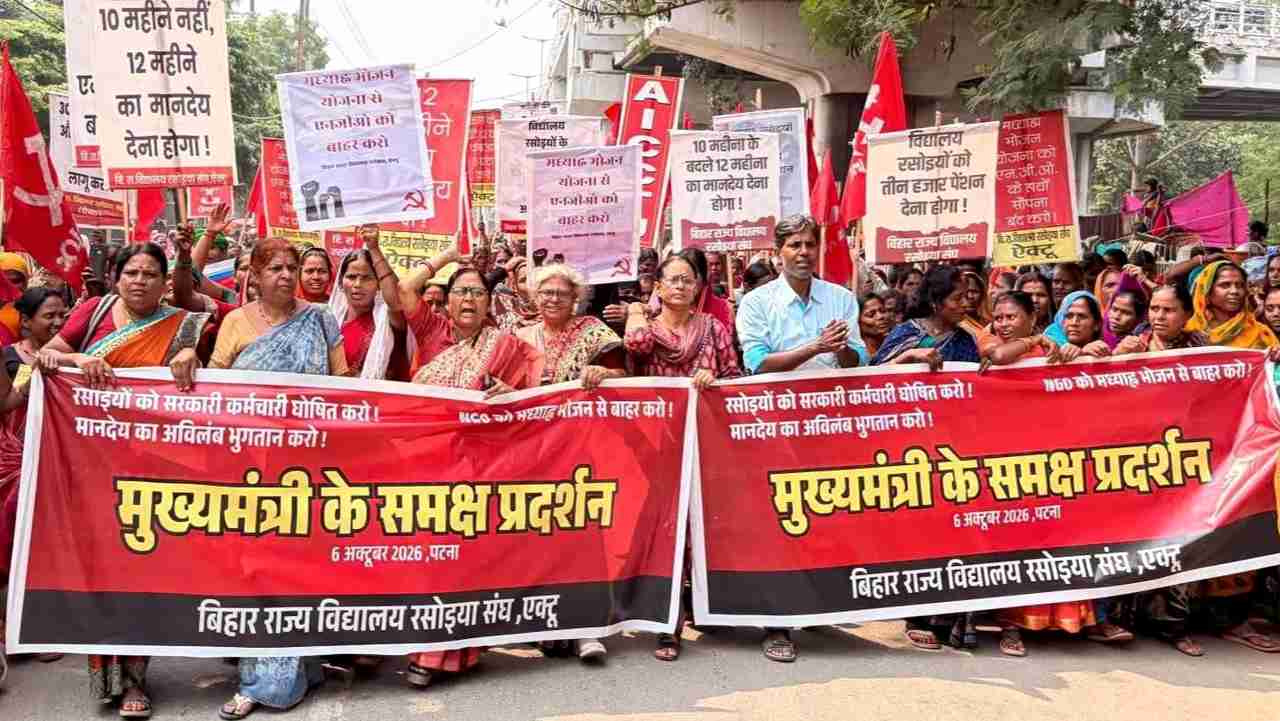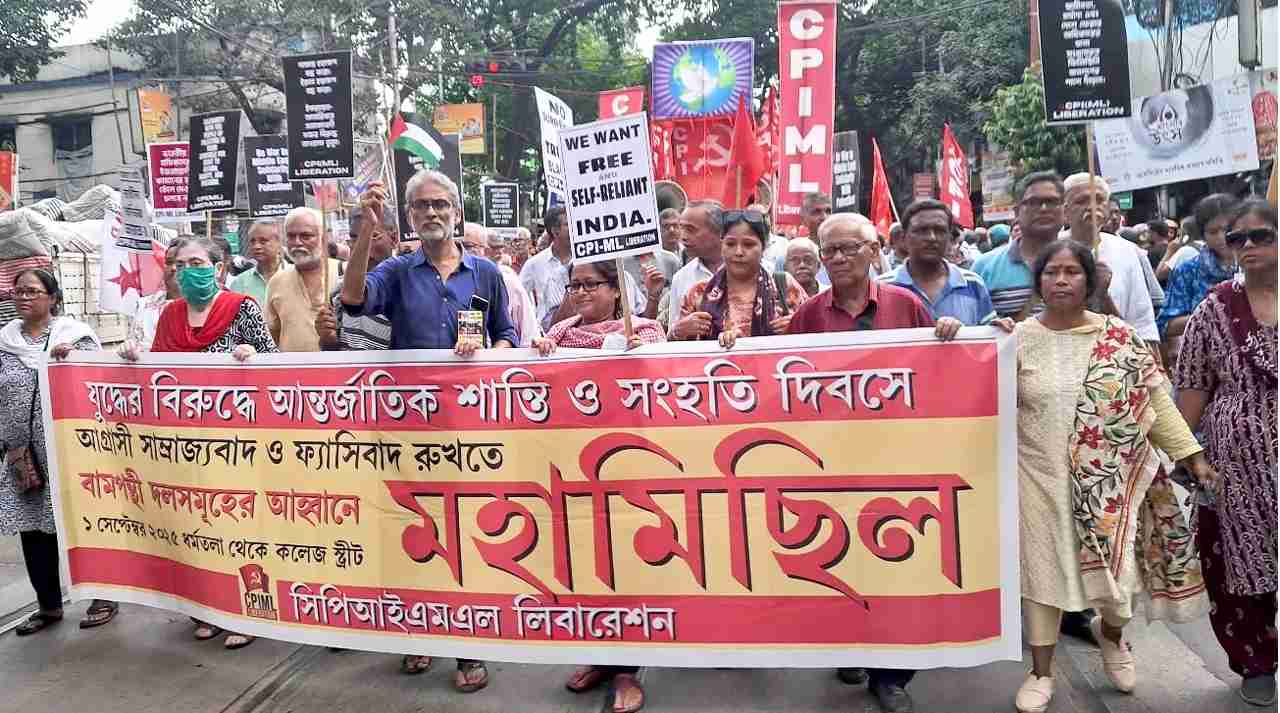
On September 1, workers across India took to the streets in response to the All India Centre of Trade Unions (AICCTU) call for an All India Protest Day against the devastating US tariffs threatening livelihoods and the Modi government's failure to protect domestic industries. The protests erupted after US President Donald Trump imposed punitive 50% tariffs on 66% of Indian exports to America, including critical sectors like apparel, textiles, gems & jewellery, shrimp, carpets, and furniture, potentially causing a catastrophic 70% plunge in exports and endangering hundreds of thousands of jobs.
The AICCTU condemned the Modi government's silence and inaction in the face of this economic aggression, pointing out that production has already halted in key manufacturing hubs like Tirupur, Noida, and Surat as cost competitiveness evaporates. The union body asserted that the government's desire to align with the United States serves corporate interests rather than national welfare, enabling wealth accumulation for conglomerates like Adani, Mahindra, and Ambani while pushing income inequality to pre-colonial levels and compromising India's independent foreign policy.
In Kolkata, the protest merged powerfully with the International Day of Peace and Solidarity against War, marked by a massive united march organized by Left parties. The mobilization resonated with global calls to Free Palestine and end Israeli apartheid, connecting domestic economic struggles to resistance against imperialism and fascism. Addressing the gathering, Comrade Atanu of AICCTU denounced Trump's tariff move as an imperialist attempt to subjugate Global South countries. He sharply criticized the Modi government's conspicuous silence amid these tariff threats and demanded that India uphold its anti-colonial legacy by declaring "India is not for sale." Comrade Atanu further stressed that India must stand firmly with Palestine amidst the ongoing US-Israeli genocidal war in Gaza, linking economic sovereignty to anti-imperialist solidarity.
Simultaneously, in Raygada, Odisha, AICCTU organized a spirited protest march. AICCTU leader Mahendra Parida asserted that India must outright reject the tariff threats and implement all necessary measures to protect the domestic sector, already reeling under a decade of relentless neoliberal attacks by the Modi regime. He highlighted how these anti-people policies have plunged India's small and medium enterprises and agriculture into deep crisis. He accused the government of shamelessly replacing self-sufficiency with the giveaway of public resources to corporations and foreign companies. "The people of India reject these moves and will not accept these colonial and neoliberal policies designed to subjugate our people and compromise our sovereignty," Parida declared to the cheering crowd.
In Puducherry, activists organized a powerful anti-imperialist poster campaign across the union territory, visually connecting the tariff assault to India's colonial history and current struggles for sovereignty. Protests were also held in Bangalore and Ranchi, Ramgarh, Lohardaga in Jharkhand.
The AICCTU reiterated its core demands: immediate government intervention to protect workers from job losses and wage cuts through robust fiscal support; the withdrawal of the four anti-worker labour codes; and an end to policies promoting contractualisation and privatization. The protests underscored growing working-class anger against a government perceived as prioritizing corporate alliances and global image over the livelihoods and dignity of its own citizens, while also failing to stand up against international bullying. The countrywide mobilization demonstrated the breadth of opposition to both external economic aggression and internal policies that undermine workers' rights and national sovereignty.