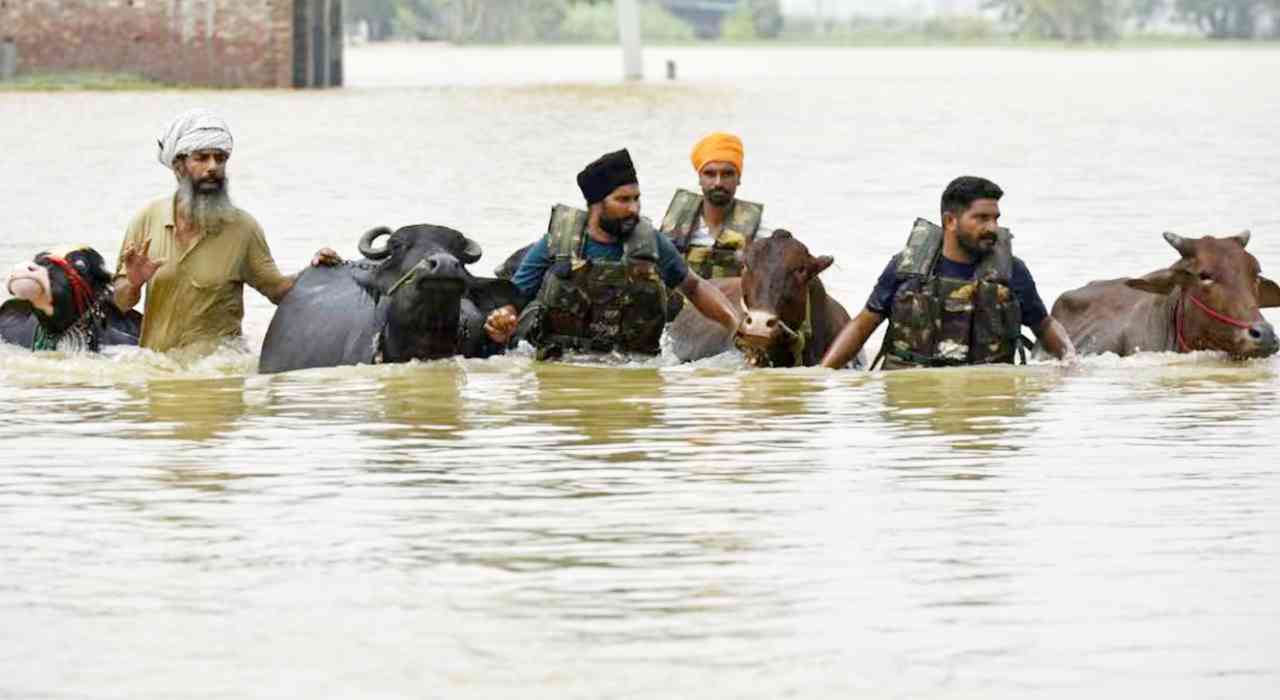
CPIML stands in solidarity with the people of Punjab, Jammu and Kashmir, Himachal Pradesh and Uttarakhand who are facing devastation from floods, cloudbursts and landslides. We express condolences to all who have lost their loved ones and share the pain of those whose homes, fields and livelihoods have been destroyed.
This tragedy comes just days after the catastrophic disaster in Dharali, Uttarakhand, once again exposing the extreme fragility of the Himalayan region. These recurring disasters are a grave reminder of the dangers posed by unscientific road cutting, destructive construction, uncontrolled resource-hoarding mafias and large scale projects that are destabilising the mountains and putting countless lives at risk. The Joshimath land subsidence, which displaced and affected hundreds of people, had already sounded a warning about the consequences of such reckless and unscientific projects in the Himalayas.
The climate crisis has further aggravated these dangers. Rising global temperatures are melting Himalayan glaciers at an alarming rate, increasing the formation of unstable glacial lakes. Unpredictable monsoons and intense rainfall in short spells are leading to flash floods and deadly cloudbursts. The Central Water Commission itself has reported that 34 out of 100 monitored glacial lakes in India show an increasing trend in water spread area, raising serious concerns about the growing risk of Glacial Lake Outburst Floods. Climate change is multiplying the risks created by reckless development, leaving mountain communities to pay the heaviest price.
CPIML demands that the Government of India immediately declare the situation in Punjab, J&K, Himachal and Uttarakhand a national disaster, ensure urgent relief and rehabilitation, and announce a comprehensive flood relief package.
A high-level scientific commission must be constituted to study the impact of climate change, glacial floods, extreme weather and unplanned infrastructure projects, and to recommend urgent measures for mitigation and sustainable planning.
Unless there is a complete course correction, disasters will only intensify. Development in the Himalayas must be guided by science, ecology and the lives of local communities, not by corporate greed and destructive mafias.