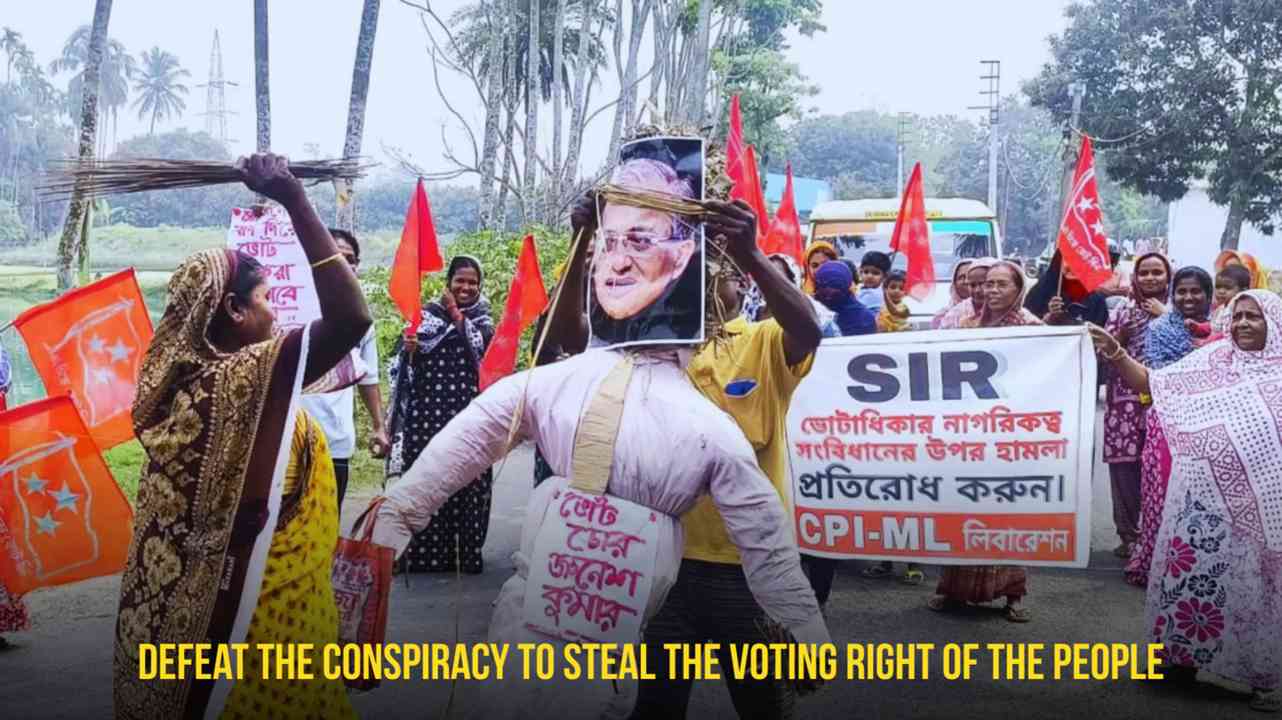
With nominations for the two-phase West Bengal Assembly elections drawing to a close, the electoral roll has been declared 'frozen' for these elections. And with this, electoral democracy, as we have known it since the first elections held in 1952, has also been shelved in the deep freeze.
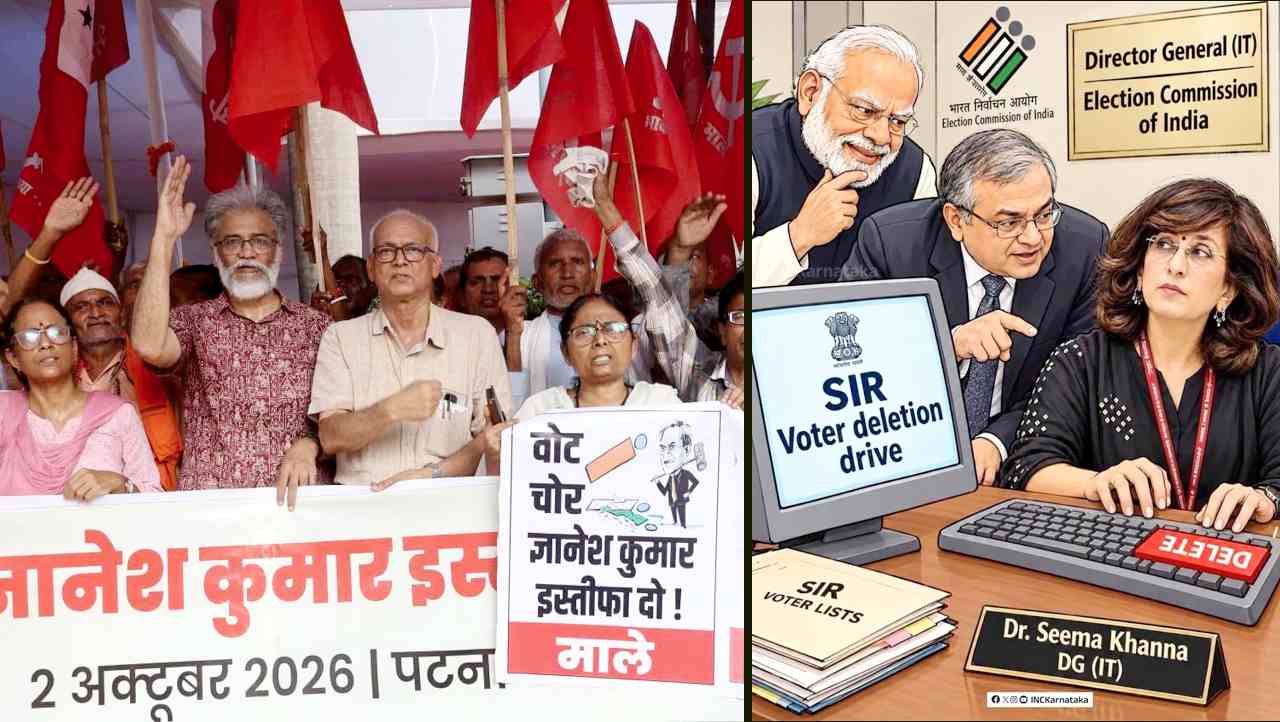
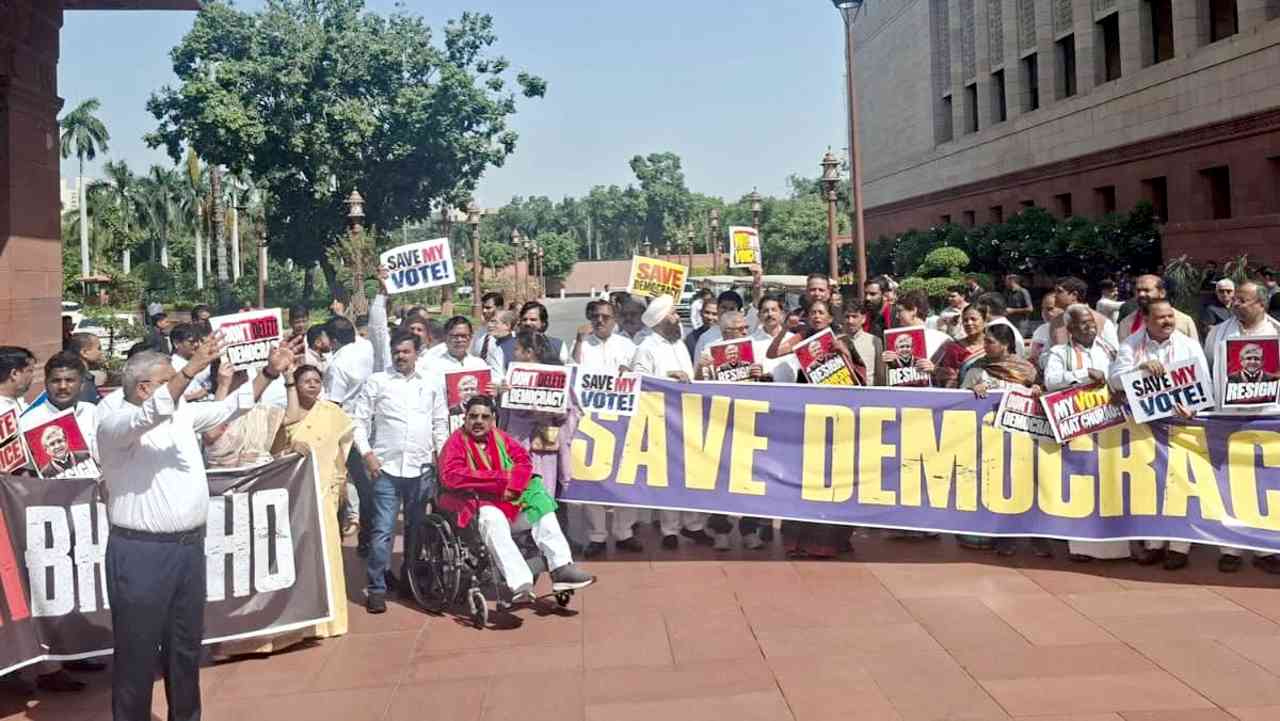
Several states have now undergone the traumatic experience of what the Election Commission of India calls SIR or Special Intensive Revision of the electoral roll. In the name of a grand foolproof updating of the electoral roll involving removing names of deceased voters, voters with multiple entries or voters who have permanently shifted from their original place of enrolment, millions of voters have been deleted from the electoral roll in Bihar, Uttar Pradesh, Tamil Nadu, Kerala and West Bengal. By the time SIR covers the whole of India, the world would have witnessed the biggest ever electoral purge.
While the scale of deletion of voters is huge in all states, what is happening in West Bengal is truly shocking with the voting right of millions of voters being suspended for no fault of their own. The initial scale of deletion in West Bengal was comparable to what we had witnessed in Bihar - 5.8 million voters out of a pre-SIR electorate of 76 million. But what started next turned out to be an unprecedented saga of mass harassment and targeted exclusion.
In West Bengal, the ECI applied an extra set of filters to detect what it called cases of 'logical discrepancy'. Using untested software and AI tools, the EC claimed to detect some 15 million such cases, eventually narrowing it down to nearly 10 million. These voters were all asked to attend hearings and submit additional documents. Another half a million deletions followed and six million were referred to adjudication. The task of electoral roll finalisation quietly became a judicial business.
The adjudication of these six million voters has produced an excessive rate of exclusion: nearly forty five percent. The scale apart, what is more scandalous about this process of adjudication and resultant deletion is the hugely disproportionate exclusion of Muslims. In some constituencies of Muslim-dominated districts like Murshidabad and Malda, the initial exclusion rate of 2-5 percent jumped ten to twentyfold to reach the 40-50 percent mark.
The pattern has been glaring even in districts with average levels of Muslim population. Let us consider, for example, the Nandigram constituency where Mamata Banerjee suffered a shock defeat in 2021 to the outgoing leader of the opposition in the West Bengal Assembly Suvendu Adhikari. Nandigram has some 25 percent Muslim population. In the first SIR list published in end December, 10,604 names were deleted of which Muslims accounted for 33.3 percent, one out of every three. But now in the supplementary list covering additional deletion of 2,826 voters, Muslims number 2,700 or a stunning 95.5 percent of further excluded voters! AltNews has found similar patterns in its intensive study of two constituencies in Kolkata - Mamata Banerjee's current seat Bhabanipur and Ballygunge.
When the issue of adjudication came up before the Supreme Court, the judges stressed the availability of another redressal forum and option for correction - the tribunal. We were told that nineteen tribunals would be set up to consider the appeals of voters deleted through the adjudication process. It sounded fine except that the tribunals existed only on paper. But with tribunals yet to really get going, how can 27 lakh excluded voters who are very much alive and documented get any justice before the elections? The court now offers the consolation that if the appeals are upheld, excluded voters could always vote in future elections! Justice delayed is justice denied. If the voting right of a citizen is suspended because of the procedural complexities of the joint operation of the Election Commission and the judiciary, it is nothing but an effective disenfranchisement of an eligible elector. And when millions of voters are excluded, the entire election becomes unfair and vitiated. Adjudication and verification can be deferred, but there can be no postponing or dilution of the principle of universal adult suffrage.
When the SIR was launched, the credo was 'no eligible voter shall be left out'. Now with twenty seven lakh voters who had voted in the 2024 Lok Sabha elections being denied their rights, the eligibility principle has been turned on its head. The vote is no longer a fundamental right for citizens in West Bengal, it is a matter of privilege and luck. An election held by denying the voting right of millions of voters is evidently a farce, an unprecedented farce right at the most fundamental level of finalisation of electoral roll.
How do we fight against this farce? Many are arguing that participation in such a farcical election amounts to legitimising this unconstitutional exercise. But can a token boycott provide an effective political answer? Or will it leave the field open for the power-grabbers? From demonetisation and electoral bonds (since declared unconstitutional by the Supreme Court) to CAA and SIR - most steps of the Modi government have been illogical and blatantly discriminatory. When citizens are forced to engage with processes shaped and distorted by these measures, they do not legitimise the wrongs, nor do they give up the struggle against these acts of injustice. More than any other state, the SIR process has become a major issue in West Bengal. That the BJP has launched such a massive onslaught on the fundamentals of the electoral system to grab power in West Bengal is now a glaring fact and the election campaign must be directed squarely against this SIR onslaught. Those who seek to purge the electors to grab power must be given a fitting rebuff.